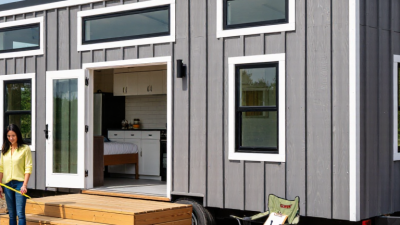
China Top 10 Tiny Home Delivery Companies?
The tiny home delivery market is moving from niche construction toward a more organized housing supply chain. Grand View Research estimates that the global tiny homes market reached approximately USD 6.5 billion in 2023. It also projects steady growth through 2030. However, definitions vary. Some reports include movable cabins, while others count only legally classified homes. That difference makes direct comparisons imperfect.
Delivery is now a major buying factor. Customers want transparent pricing, factory quality, realistic lead times, and careful placement on prepared foundations. A small home arriving on a flatbed truck still requires routes, permits, cranes, utility connections, and local inspections. These details can decide whether a beautiful unit becomes a practical home.
Alexis Stephens, co-founder of Tiny House Expedition, has described tiny houses as “a tool, not a solution.” That sentence matters here. A dependable tiny home delivery company should not sell minimal space as a universal answer. It should explain insulation, plumbing, towing limits, warranty coverage, and regional building requirements. Reports from Grand View Research and Allied Market Research indicate continued industry expansion, but market estimates remain inconsistent. That uncertainty deserves attention.
This guide reviews China’s top 10 tiny home delivery companies through a practical lens. It considers manufacturing experience, customization, export support, delivery coordination, materials, after-sales service, and documented customer evidence. Company rankings can change quickly. Factory visits, sample inspections, and contract reviews remain essential. A polished website is not proof of reliable delivery. The real test is simple: can the company deliver the promised home, safely and on schedule, to the customer’s site?
What Are Tiny Home Delivery Companies in China?
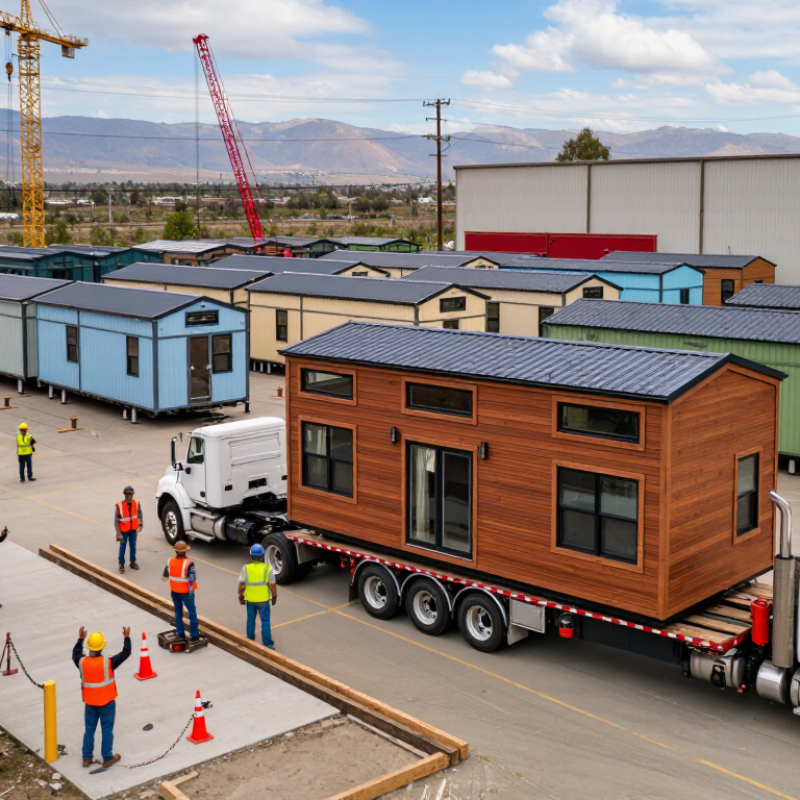
China’s tiny home delivery companies are more than online sellers. They usually design compact units, manufacture panels or modules, transport them, and manage on-site installation. Some also provide plumbing, electrical work, insulation, and permit support. The term “tiny home” remains unclear in China, because official statistics often classify these units as prefabricated buildings, modular houses, or temporary accommodation.
China’s Ministry of Housing and Urban-Rural Development reported that prefabricated building construction exceeded one billion square meters in 2022. This shows strong industrial capacity, but it does not measure tiny homes alone. Industry research also warns that market estimates differ widely because companies use different definitions and sales channels. Delivery distance matters. A small 20-square-meter module may still require a reinforced truck, lifting equipment, and a prepared foundation. These costs can exceed expectations. My view is cautious: factory production improves consistency, yet customization may reduce the promised speed.
Tips: Check the company’s factory experience, transport plan, foundation requirements, insulation rating, and after-sales terms. Ask for a written delivery timeline. Confirm local planning rules before paying. A low online price may exclude cranes, wiring, taxes, or installation. Inspect one completed unit in person, if possible. Industry reports from the International Energy Agency also link better building envelopes with lower operational energy use, so comfort deserves equal attention.
How the Top 10 Companies Are Selected and Compared
China Top 10 Tiny Home Delivery Companies?
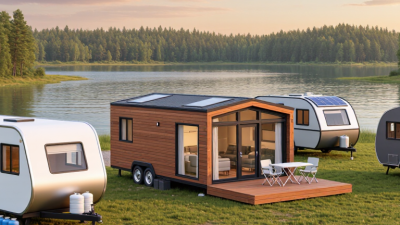
Selecting the top ten requires more than counting factory photos or export claims. I compare verified delivery records, production capacity, material traceability, design support, installation guidance, and after-sales response. Delivery data matters most. A home that leaves a factory is not necessarily a completed project. Site access, permits, weather, and utility connections can change the result.
The comparison uses measurable evidence. China’s Ministry of Housing and Urban-Rural Development promotes prefabricated construction through its 14th Five-Year Plan, highlighting industrial production and quality control. Grand View Research estimated the global modular construction market at about USD 92.18 billion in 2022, with continued growth expected through 2030. These figures support market relevance, but they do not prove tiny-home performance. That distinction is important.
I also review structural specifications, insulation values, fire documentation, warranty terms, and average delivery windows. Companies receive stronger scores when they publish test reports and provide project photographs with locations and dates. Customer references are useful, though they can be selective. Public information is often incomplete. Some suppliers report annual output without separating tiny homes from larger modular buildings. That weakness affects ranking confidence. Cost is measured per usable square metre, not by the cheapest quotation. A low price may exclude transport, foundations, plumbing, or on-site assembly. The final list therefore combines documented experience, technical expertise, transparent evidence, and practical delivery reliability.
China Top 10 Tiny Home Delivery Companies
How the Top 10 Companies Are Selected and Compared
The chart presents an editorial scoring framework for evaluating China-based tiny home delivery providers. The criteria reflect practical purchasing considerations, including regulatory documentation, delivery capability, construction quality, customization, after-sales support, pricing transparency, lead time, and sustainability. The weights are used to compare the shortlisted top 10 providers without displaying company or brand-level data.
Profiles of China’s Top 10 Tiny Home Delivery Companies
China’s tiny-home delivery sector includes ten leading company types, each serving a distinct buyer need. The first focuses on steel-frame cabins for rural resorts. Another builds foldable units for fast installation. A third supplies insulated modular offices. Other leaders specialize in container homes, timber cabins, mobile studios, emergency accommodation, senior-friendly layouts, solar-ready units, and custom vacation homes.
Their differences become visible during delivery. Strong suppliers publish floor plans, material specifications, factory photographs, and installation schedules. They also explain transport limits, foundation requirements, fire performance, and local approval responsibilities. Grand View Research estimated the global tiny homes market at about USD 6.46 billion in 2023, with continued growth expected through 2030. China’s prefabricated building policy also encourages factory production and shorter construction cycles. These figures support market interest, but they do not prove every supplier is dependable. Some online profiles remain too promotional. That deserves scrutiny.
Tips: Request a complete quotation, including crane access, inland freight, taxes, foundation work, and after-sales visits. Check steel thickness, insulation ratings, window performance, and moisture protection. Ask for two completed-project references. Delivery time can change with weather and port capacity. A practical comparison sheet helps. Look beyond attractive renderings. A cheaper unit may require expensive site preparation, and this is where many buyers miscalculate.
Delivery Services, Construction Methods, and Customization Options
China Top 10 Tiny Home Delivery Companies?
For a China-based top-ten shortlist, delivery quality deserves equal weight with design. A reliable provider should confirm factory inspection, route surveys, lifting plans, and final-site installation.
Modular construction can shorten schedules by 20–50%, according to McKinsey’s 2019 industry analysis. However, narrow village roads and weak bridge limits can erase that advantage. A 12-ton unit may need a smaller crane, temporary road plates, and careful delivery timing.
Construction methods differ sharply. Steel-frame modules offer strength and repeatable production, while timber systems can provide better interior warmth. Panelized construction usually reduces transport weight, but requires more work on site.
Buyers should request wall-section drawings, insulation values, moisture protection details, and electrical test records. The UNEP 2024 Global Status Report says buildings and construction consume 32% of global energy and create 34% of global carbon emissions. Material efficiency matters, even in a small home.
Customization should go beyond color and cabinets.
Useful options include foldable furniture, heat-pump systems, triple glazing, accessible bathrooms, and reinforced connections for local wind or seismic conditions. Ask whether changes affect structural approval or delivery dates.
In my experience, customers often over-customize early, then regret the added maintenance. A better process uses a fixed base model, a short options list, and one physical sample room.
Reported savings are not guaranteed. Site conditions still decide the final result.
Pricing, Regulations, and Buying Considerations in China
China’s top ten tiny home delivery companies often serve different needs, from compact studios to movable modular cabins. Prices commonly range from RMB 80,000 to RMB 300,000, depending on materials, insulation, plumbing, transport, and installation. Low quotes may exclude foundation work, permits, furniture, or delivery fees. Ask for an itemized contract.
Regulations vary by province, city, and land classification. A movable structure is not automatically exempt from approval. Buyers should confirm land-use rights, planning permission, fire safety, utility access, and local construction rules before paying a deposit. An experienced surveyor or qualified local consultant can verify these points. Online claims may be incomplete.
Tips: Request factory drawings, material specifications, warranty terms, and recent delivery photos. Check whether the quoted price includes crane unloading and site preparation. Visit a completed project if possible. Keep payment stages linked to inspections. Small details matter.
Consider winter temperatures, humidity, road width, and maintenance access. A beautiful unit may fail if trucks cannot reach the site. Some suppliers promise fast delivery, but custom interiors can extend production by several weeks. I would also leave a contingency budget of 10–20 percent. Even careful plans miss something.
China Top 10 Tiny Home Delivery Companies? - Pricing, Regulations, and Buying Considerations in China
| Rank | Delivery Option | Typical Floor Area | Indicative Factory Price | Typical Production Time | Transport and Installation | Main Regulatory Considerations in China | Best Suited For |
|---|---|---|---|---|---|---|---|
| 1 | Light-gauge steel modular home | 18–60 m² | RMB 2,500–5,500/m² | 30–60 days | Usually shipped in panels or modules; crane access and a prepared foundation are normally required. | Confirm land-use rights, planning approval, structural design, fire safety, and local construction requirements before purchase. | Permanent or semi-permanent housing |
| 2 | Flat-pack panelized cabin | 10–40 m² | RMB 1,500–3,500/m² | 20–45 days | Compact panels reduce freight volume; installation is generally faster than a fully assembled unit. | Even when marketed as movable, local authorities may require approval if the cabin is placed on land for regular use. | Backyard rooms and short-stay accommodation |
| 3 | Foldable container-style house | 15–35 m² | RMB 2,000–4,500/m² | 15–35 days | Delivered folded or partially assembled; a level base, utility connections, and lifting equipment may be needed. | Check local restrictions on temporary buildings, fire separation, electrical safety, and placement near roads or waterways. | Fast deployment and temporary projects |
| 4 | Converted shipping-container home | 14–30 m² per container | RMB 2,500–6,000/m² | 25–60 days | Requires truck access, unloading space, and often a crane; insulation and corrosion protection are important. | Structural modifications, fire protection, thermal performance, and land-use compliance should be reviewed by qualified professionals. | Studios, offices, and rental units |
| 5 | Prefab sandwich-panel cabin | 10–50 m² | RMB 1,200–3,000/m² | 15–40 days | Lightweight components are economical to transport; assembly quality strongly affects weather resistance and durability. | Verify panel fire rating, electrical installation, emergency exits, and whether the site is permitted for occupancy. | Budget accommodation and site facilities |
| 6 | Wooden or timber-frame tiny home | 20–80 m² | RMB 3,500–8,000/m² | 45–90 days | May be shipped in sections; moisture protection, road access, and on-site finishing can increase total delivery time. | Check local fire-code requirements, timber treatment, structural calculations, and planning approval for the intended site. | Rural retreats and tourism projects |
| 7 | Aluminium-frame glass cabin | 15–45 m² | RMB 4,000–9,000/m² | 45–90 days | Glass and aluminium modules need careful packaging; foundation accuracy and crane access are particularly important. | Review wind-load design, safety glazing, energy performance, privacy, and local restrictions on scenic or protected land. | Scenic accommodation and premium stays |
| 8 | Concrete modular micro-home | 20–60 m² | RMB 3,500–7,500/m² | 60–120 days | Heavy modules require engineered foundations, suitable roads, transport permits, and a high-capacity crane. | Obtain professional structural review and confirm compliance with local building, seismic, fire, and planning standards. | Long-term residential use |
| 9 | Expandable modular home | 20–55 m² when expanded | RMB 2,500–5,500/m² | 30–75 days | Transported in a compact form and expanded on site; hydraulic, electrical, and weather-sealing systems require inspection. | Do not assume expandability removes approval requirements; confirm the final occupied area and local construction rules. | Flexible residential or commercial use |
| 10 | Fully customized prefab villa unit | 30–100 m² | RMB 4,500–10,000+/m² | 60–150 days | May include design, manufacturing, delivery, and installation; project management and site preparation are usually charged separately. | Require a complete local compliance review covering land rights, planning, construction permits, utilities, fire safety, and acceptance procedures. | Higher-end residential and hospitality projects |
Prices are indicative factory-level ranges in mainland China and generally exclude land, taxes, foundation work, utility connections, transport, crane hire, installation, interior upgrades, and local approval costs. A “movable” or “temporary” label does not automatically exempt a project from local planning, land-use, fire-safety, or construction requirements. Confirm the applicable rules with the relevant county- or city-level authorities before signing a contract.