How to Buy Manufactured Tiny Homes in 2026?
Buying manufactured tiny homes in 2026 requires more than admiring clever layouts and low monthly costs. You need a realistic plan for land, transport, installation, financing, utilities, and long-term maintenance. A polished model may look affordable, yet delivery fees, foundation work, permits, and site preparation can change the final price quickly. Measure the driveway, inspect utility access, and ask who pays when the delivery truck cannot reach your property.
Jay Shafer, an early tiny-house designer and industry pioneer, said, “The less house you have, the more life you have.” That idea remains useful, but it needs careful examination. Smaller space can reduce clutter and energy use. It can also expose poor ventilation, limited storage, or uncomfortable sleeping areas. Visit a completed home if possible. Stand inside the bathroom. Open every cabinet. Imagine carrying groceries through the entrance during heavy rain.
This guide explains how to compare manufactured tiny homes without relying on attractive brochures alone. It covers construction quality, certification, floor plans, insulation, appliances, warranties, and supplier reputation. It also examines local zoning and placement requirements, which differ widely by location. Confirm these rules with the relevant local authorities before signing a contract. Ask manufacturers for written specifications, inspection records, delivery estimates, and a complete cost breakdown. Some sellers communicate clearly. Others do not. That difference matters.
A careful buyer should also compare several homes over time, not just during one exciting showroom visit. Take notes. Photograph details. Sleep on the decision. The smallest mistake can become expensive.
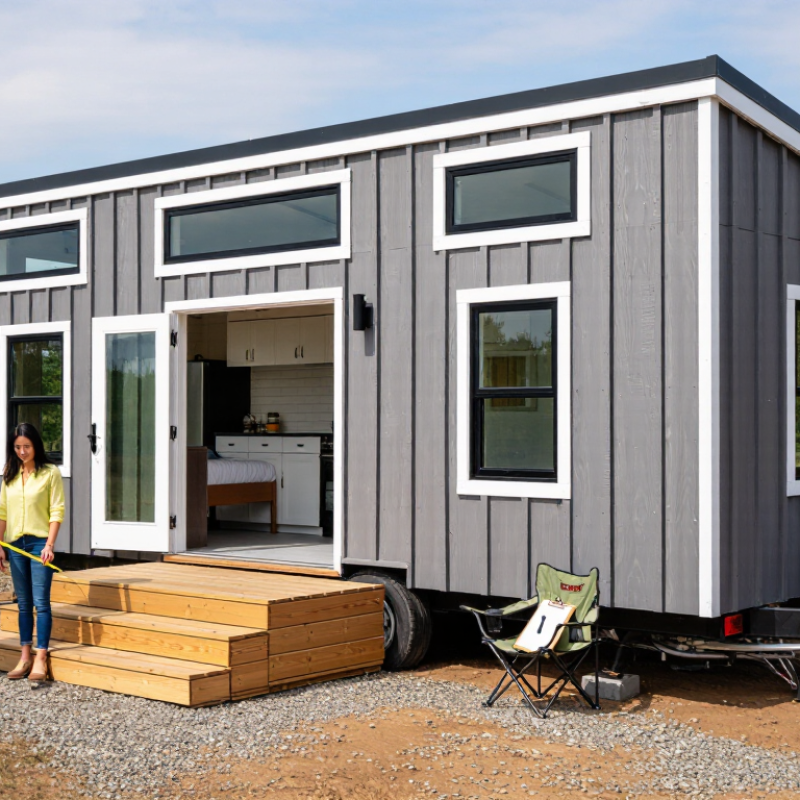
Define Your Tiny Home: HUD Code vs. IRC Appendix Q’s 400-Sq.-Ft. Limit
Before shopping, define “tiny home” by its code pathway, not its marketing label. A HUD Code manufactured home is factory-built on a permanent chassis and carries federal certification. Its federal definition generally starts at 320 square feet, so the 400-square-foot ceiling does not define every manufactured home. The U.S. Census Bureau’s 2023 Manufactured Housing Survey reported an average new manufactured-home price of about $129,900, excluding land and many site costs.
IRC Appendix Q addresses small, site-built dwellings, including lofts and compact stairs. Its key limit is 400 square feet of floor area, excluding loft space under the adopted rules. However, Appendix Q is not automatically valid everywhere. Local governments decide whether to adopt it, modify it, or reject it. Ask the building department for the current residential code edition before paying a deposit.
Measure the usable floor area with a simple sketch. A six-inch wall change can affect compliance. Check ceiling heights, emergency escape windows, stair dimensions, insulation, foundation requirements, and utility connections. These details often cost more than expected. Freddie Mac’s 2024 manufactured-housing research continues to identify land, financing, and infrastructure as major affordability barriers. The confusing part is real: “tiny,” “manufactured,” and “modular” are not interchangeable terms. A written zoning and permit review is safer than relying on a sales brochure.
Verify Zoning, Utilities, and HUD Installation Standards Before Ordering
How to Buy Manufactured Tiny Homes in 2026?
A manufactured tiny home is not automatically legal on every lot. County zoning may limit minimum sizes, roof designs, setbacks, or permanent occupancy. Confirm these rules in writing before paying a deposit. The U.S. Census Bureau’s 2023 Manufactured Housing Survey recorded approximately 89,000 manufactured home shipments. That volume shows demand, but it does not guarantee local approval.
Check whether the home carries a valid HUD certification label and data plate. HUD’s installation standards under 24 CFR Part 3286 address foundations, anchoring, site preparation, and utility connections. Ask for the installation manual, engineering documents, and a signed site assessment. Water pressure, sewer capacity, electrical service, and winter temperatures can change the installation cost sharply. Small details matter.
Do not assume a completed factory build means a finished residence. It may not.
Request written confirmation from the zoning office, utility providers, and installer. The U.S. Department of Energy’s manufactured housing energy standards also affect insulation, windows, heating, and ventilation. A cheaper shell can create higher operating costs later. I would also verify who obtains permits and who accepts final inspection. Responsibilities often sound clear until something fails. Even experienced buyers miss this step. The paperwork deserves more attention than the showroom.
Compare 2026 Prices With U.S. Census and MHI Manufactured-Housing Data
How to Buy Manufactured Tiny Homes in 2026?
A 2026 buyer should compare home prices with national manufactured-housing data, not online listings alone. The U.S. Census Bureau reports manufactured-home shipments, placements, and sales characteristics, but it does not track every tiny home. Some compact units are not HUD-code manufactured homes. That difference changes financing, inspections, and resale expectations.
The Manufactured Housing Institute reported an average 2023 new manufactured-home price of about $129,900, excluding land and related site costs. Census data also shows that transportation, foundations, utility connections, and installation can materially increase the final price. A small home priced at $85,000 may need another $25,000 or more for delivery, permits, grading, and hookups. Sometimes, the “cheap” option is not cheap.
For a practical 2026 comparison, request an itemized quote with the home, freight, foundation, setup, appliances, taxes, and utility work separated. Compare that total against MHI price benchmarks and the latest Census placement data. Check whether the quoted unit is legally classified as a manufactured home, modular home, or another dwelling type. The label matters.
Prices vary sharply by region. Rural land may reduce purchase costs but increase infrastructure expenses. Urban lots often reverse that pattern. I would also allow a repair reserve, because new does not mean flawless. Industry averages are useful, but they are not a personal estimate.
Evaluate Financing Using FHA Title I Limits, APR, and Loan-to-Value
Buying a manufactured tiny home in 2026 starts with checking whether FHA Title I financing fits the project.
Title I may support the home, the lot, or both, but eligibility depends on property details and lender approval.
Verify the current 2026 loan limits before negotiating.
Limits can change, and a promising online estimate may be outdated.
APR matters more than the advertised interest rate.
It can include certain lender fees and shows a broader borrowing cost. Compare APRs using the same loan amount and repayment term.
A lower monthly payment may hide a longer term and higher total interest.
Ask for a written payment schedule. Read every line.
Loan-to-value, or LTV, compares the loan with the home’s accepted value.
For example, a $90,000 loan against a $100,000 valuation equals 90% LTV.
However, the lender may use the lower of the purchase price or appraisal. If the appraisal comes in at $92,000, your planned cash contribution could change.
That surprised me during a prior financing review. My first estimate was too optimistic. Land ownership, installation costs, foundation work, insurance, and credit history can also affect approval. Keep a cash reserve for permits, transport, utility connections, and repairs.
A lender’s worksheet is useful, but it is not a guarantee.
Verify Title I limits, APR calculations, valuation methods, and closing costs directly with an authorized lender before signing.
Inspect, Transport, Set, and Register the Home With HUD Certification
How to Buy Manufactured Tiny Homes in 2026?
A careful inspection should begin before the home leaves the factory. Check the HUD certification label, usually fixed outside the home, and match its number with the data plate inside. The plate should show wind, roof-load, and heating specifications. Examine the frame, roof seams, windows, plumbing lines, and visible wiring. Moisture marks deserve attention. A clean interior can still hide transport damage or weak support points. An independent inspector is worth the cost, although inspection reports are never perfect.
Transport requires more than booking a trailer. Confirm the home’s width, height, weight, and approved travel route. Ask about permits, escort vehicles, weather limits, and insurance coverage. Remove loose fixtures before movement. Photograph doors, walls, and utility connections. These records can expose damage that happened during delivery. Sometimes buyers focus on the purchase price and underestimate cranes, blocking, skirting, and site preparation.
Setting the home requires a foundation or support system that matches local requirements and the manufacturer’s installation instructions. Qualified workers should complete anchoring, leveling, electrical connections, water lines, and sewage work. Local officials may require separate inspections. Registration also varies by location. Prepare the sales contract, serial numbers, HUD label information, proof of ownership, tax documents, and installation approvals. A HUD label supports compliance, but it does not replace local registration. Requirements change, and online advice can be outdated. Verify every detail with the relevant housing, building, and registration offices.
How to Buy Manufactured Tiny Homes in 2026? — Inspect, Transport, Set, and Register the Home With HUD Certification
Before transport and installation, verify these measurable HUD inspection checkpoints: habitable-room ceiling height must be at least 90 inches, emergency escape openings must be at least 20 inches wide and 24 inches high, and the sill must not be more than 44 inches above the floor. Confirm the HUD certification label, data plate, site-set requirements, and local registration rules before delivery.
Reference: U.S. Manufactured Home Construction and Safety Standards, 24 CFR § 3280.104. Measurements are shown in inches.