Who Is the Top China Aluminum Composite Panel Manufacturer?
Who Is the Top China Aluminum Composite Panel Manufacturer? The answer requires more than comparing prices or browsing polished factory photos. A dependable Aluminum Composite Panel Manufacturer should demonstrate stable core quality, accurate panel flatness, consistent coating thickness, and documented fire-performance testing. Look for production details: clean lamination lines, controlled curing rooms, sealed sample edges, and batch numbers that remain traceable months later.
Murray McGowan, an experienced composite-panel industry executive, expresses the principle clearly: “A façade panel is only as reliable as the system behind it.” That statement matters on a rainy construction site. A panel may look perfect in a showroom, yet fail through poor routing, weak bonding, or careless installation. The strongest manufacturers provide technical drawings, realistic tolerances, installation guidance, and responsive after-sales support. They also explain limitations instead of promising everything.
There is no universal winner. Project location, building height, climate, design complexity, and compliance requirements change the decision. A coastal project needs different protection from an inland commercial interior. A low quotation may conceal thinner skins, unstable cores, or incomplete testing records. Still, even respected factories can make mistakes. Supplier audits, third-party reports, retained samples, and small trial orders remain necessary.
This guide examines China’s leading manufacturers through practical evidence. It considers material consistency, engineering support, certifications, production capacity, export experience, and customer reliability. The top choice is not simply the largest factory. It is the manufacturer that delivers measurable quality when the deadline, weather, and installation team become difficult.
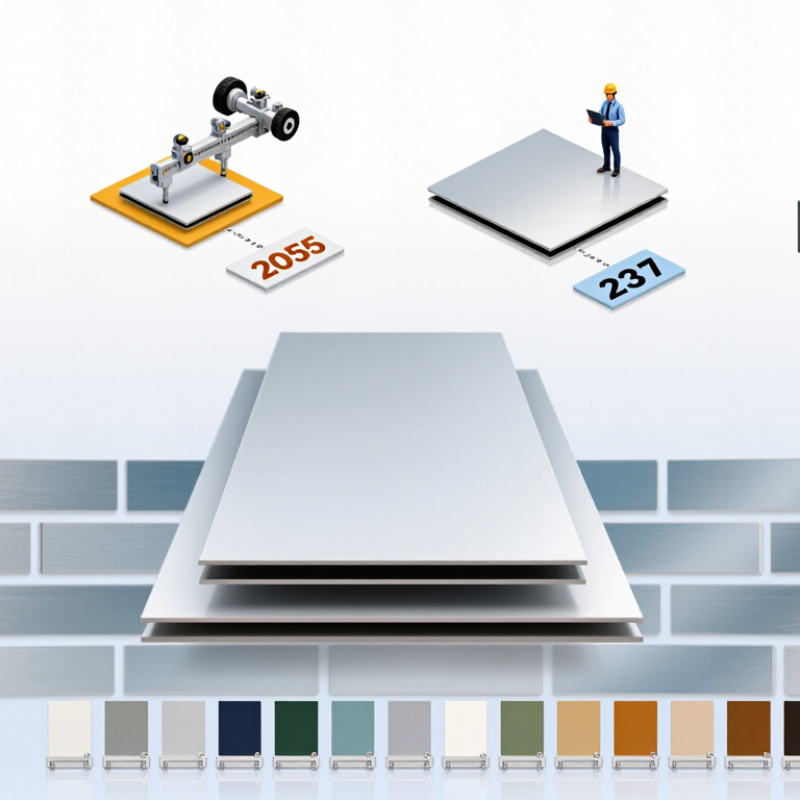
What Defines a Leading China Aluminum Composite Panel Manufacturer?
A leading China aluminum composite panel manufacturer is defined by controlled performance, not production volume alone. Grand View Research’s Aluminum Composite Panels Market report estimates the global market will expand at about 6% annually through 2030. That growth increases pressure on suppliers to prove consistency.
A dependable factory should document core thickness, coating weight, flatness, peel strength, and batch traceability. Independent testing should also verify fire behavior under standards such as EN 13501-1 or ASTM E84.
Experience appears in small details. Technicians check protective film adhesion before shipment, inspect panel edges under bright lighting, and record curing temperatures.
A serious manufacturer can explain test methods without hiding behind marketing language. ISO 9001 certification supports process control, but certification alone does not guarantee excellent panels. Factory audits, retained samples, and corrective-action records reveal more. No factory gets every detail right. The honest question is how quickly it detects and fixes defects.
Tips: Request recent test reports, not old certificates. Compare coating thickness across several batches. Ask for packaging photos and loading procedures. Check whether the quoted fire rating applies to the complete panel system. Reports from organizations such as ASTM International and the International Organization for Standardization provide useful testing references, but project conditions still matter. Humidity, cutting quality, installation gaps, and transport damage can change real-world performance. A leading manufacturer should discuss these risks openly, even when the answer is inconvenient.
Key Manufacturing Capabilities and Quality Standards
Who Is the Top China Aluminum Composite Panel Manufacturer?
Key Manufacturing Capabilities and Quality Standards
A leading aluminum composite panel manufacturer should control every stage, from coil preparation to final packing. Experienced production teams inspect aluminum thickness, coating adhesion, color consistency, and surface flatness. Automated laminating lines help maintain stable bonding under controlled temperature and pressure. Skilled technicians still matter. Machines cannot identify every unusual surface mark.
Reliable factories use batch numbers for aluminum sheets, coatings, cores, and finished panels. This traceability supports faster investigation when a project reports peeling, warping, or color variation. Quality departments may test peel strength, impact resistance, dimensional tolerance, and coating thickness. Fire performance also requires project-specific testing against applicable GB/T, EN, ASTM, or other recognized standards. Certificates should match the actual panel structure, not a similar product.
Factory audits reveal practical details that brochures often omit. Look for calibrated instruments, retained samples, clean storage areas, and clear inspection records. Samples should be checked after cutting, bending, and routing, because installation can expose weak bonding. No factory is flawless. A manufacturer that records nonconforming panels and corrects the process deserves more trust than one claiming zero defects. I would also verify outdoor durability through documented testing, since laboratory results cannot predict every climate. Small gaps in inspection may become visible on a large façade.
How to Evaluate Product Quality, Certifications, and Service
Choosing the top China aluminum composite panel manufacturer requires more than comparing online prices. Product quality should be checked through measurable details, not polished photographs. Request samples and inspect panel flatness, coating consistency, edge bonding, and surface color under natural light. Ask for test data covering peel strength, impact resistance, weathering, and fire performance. A reliable supplier should explain testing methods clearly.
Certifications also need careful review. Check the certificate number, issuing body, validity period, and product scope. An ISO certificate may describe management systems, not panel performance. Confirm whether fire or environmental claims apply to the exact panel structure you plan to purchase. Factory audits can reveal useful details, including raw material storage, core mixing, and quality records. Still, no inspection method is flawless. Samples can look excellent while batch control remains inconsistent.
Service often separates a dependable manufacturer from a merely capable one. Evaluate response speed, technical drawings, color matching, packaging, and replacement procedures before signing an order. Ask how the team handles damaged corners after shipping. Request a written quality standard and a pre-shipment inspection plan. Small details matter. Clear answers show experience. Vague promises create risk. I would also test communication during a small trial order, because impressive sales support may weaken after payment. That lesson is easy to overlook. A strong manufacturer combines verified production capability, honest documentation, practical engineering support, and consistent after-sales communication.
How to Evaluate a China Aluminum Composite Panel Manufacturer
Recommended evaluation weighting based on commonly used construction-material purchasing criteria
Product quality carries the greatest weight because panel flatness, coating durability, core consistency, bonding strength, and dimensional stability directly affect project performance. Certifications such as ISO 9001, EN 13501-1, ASTM E84, and relevant environmental documentation help verify manufacturing controls, fire performance, and compliance. Service factors include technical support, sample approval, lead time, packaging, warranty handling, and after-sales response.
Choosing the Right Manufacturer for Your Project
Choosing the right China aluminum composite panel manufacturer requires more than comparing prices. A reliable supplier should show stable core density, coating thickness, flatness, and bonding strength. Ask for recent laboratory reports, not old brochures. Standards such as EN 13501-1 and ASTM E84 help verify fire performance for different markets. Factory experience also matters. A technical team should explain panel structure, cutting tolerances, and installation limits clearly.
The International Aluminium Institute reports that recycling aluminum uses about 5% of the energy needed for primary production. This makes recycled content worth discussing, but documentation is essential. Request material declarations, batch records, and coating warranties. Check whether the manufacturer controls aluminum forming, painting, lamination, and quality inspection in one system. A factory audit can reveal practical details, such as dusty storage areas or inconsistent protective film. These small signs matter. I have learned that impressive samples can hide weak production control.
Tips: Order a full-size sample, not only a small piece. Test the corner, surface gloss, and panel flatness. Ask for a third-party inspection before shipment. Compare at least three quotations using the same specifications. The lowest price may reflect a thinner skin, weaker core, or shorter warranty. That is not always obvious. Choose a manufacturer that answers difficult questions with measurable evidence, even when the answer is inconvenient.


