CUSTOMISE Your Tiny Home - Call us now!

What Are the Top 10 Types of Film Faced Plywood?

Choosing the right Film Faced Plywood begins with understanding how each type behaves on a real construction site. A smooth brown panel may look suitable, yet its core, adhesive, coating, and edge sealing determine its performance. Concrete pressure, moisture, repeated stripping, and storage conditions can expose weak points quickly.

Plywood technologist Mark K. Halverson explains, “Panel performance depends on the whole construction, not the face veneer alone.” This practical view matters when comparing birch, poplar, eucalyptus, and mixed-hardwood panels. It also reminds buyers to examine more than surface appearance. A glossy film can hide uneven layers. A strong-looking edge may still absorb water. Details matter.

This guide explores the top 10 types of Film Faced Plywood and the situations where each type may perform best. It considers wood species, film weight, bonding quality, surface texture, and reuse potential. Some categories overlap, and manufacturers may use different names for similar products. That can create confusion.

The “best” panel is not universal. A lightweight poplar board may suit short projects and easier handling. A dense birch panel may provide sharper concrete finishes and greater durability. However, heavier does not always mean better value. Site conditions, formwork design, and worker experience can change the result.

The comparison ahead aims to be useful, but not absolute. Product claims deserve verification. Ask for technical data, inspect samples, and test panels when the project carries serious quality demands.
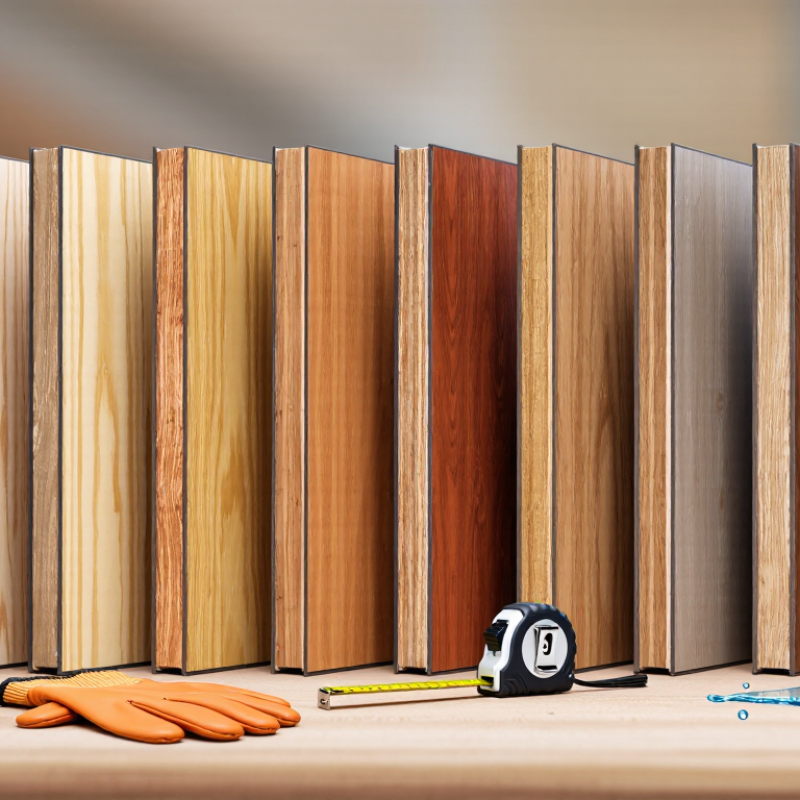
What Are the Top 10 Types of Film Faced Plywood?

How the Top 10 Film Faced Plywood Types Differ by Core, Film, and Grade

Film faced plywood is not one uniform product. Its performance depends on three variables: core construction, surface film, and grade. In practical formwork inspections, the core often explains more failures than the dark surface.

Hardwood-core plywood offers strong screw holding and good impact resistance. Poplar-core panels are lighter and easier to handle, but their strength can vary. Birch-core plywood provides stable layers and a smoother edge. Eucalyptus-core sheets balance density, cost, and repeated use. Combi-core plywood combines hardwood and lighter veneers, reducing weight without losing too much stiffness. These are five common core-based types.

The remaining differences usually come from the film and grade. Phenolic-film plywood resists moisture and releases concrete cleanly. Melamine-film plywood gives a smoother finish but may need gentler handling. Smooth-film panels suit visible concrete surfaces, while textured-film panels provide better slip resistance on platforms. Exterior-grade plywood uses more water-resistant bonding, and structural-grade plywood is selected for verified load performance. Not every “waterproof” claim means unlimited exposure. That wording needs checking.

A dense core with a thin film may fail sooner than a moderate core with properly sealed edges. Film thickness, veneer gaps, panel flatness, and repair quality all matter. I have seen attractive sheets perform poorly after careless stacking and wet storage. Selection should follow the number of pours, expected loads, cutting method, and required finish. Sometimes the cheaper panel is the expensive choice.

Birch, Poplar, Hardwood, and Combi-Core Panels: 400–700 kg/m³

Film faced plywood is not one uniform material. Its performance depends heavily on the core species, density, glue line, and surface film.

Birch plywood usually sits near 650–700 kg/m³. Its tight grain supports strong screw holding and repeated formwork use. Poplar plywood is lighter, often around 400–550 kg/m³. It is easier to handle, but softer edges can suffer during rough installation. Hardwood plywood commonly ranges from 550–700 kg/m³. It offers better impact resistance, although quality may vary between logs and production batches.

Combi-core plywood combines different wood species in one panel. Its density often falls between 500 and 650 kg/m³. This structure can balance weight, strength, and cost. Other common types include eucalyptus, maple, beech, spruce, mixed hardwood, and multi-species core panels. Their densities may overlap, so the species name alone is not enough.

A practical inspection starts with the panel edge. Look for tight veneers, few open gaps, and consistent thickness. Tap the sheet gently; hollow sounds may indicate internal separation. Moisture also changes measured density, which is easy to overlook. Film thickness matters too, especially when concrete release and cleaning cycles are demanding.

A higher density does not automatically mean better plywood. Dense panels can be heavy and harder to cut. Lightweight panels may work well for short cycles, but repeated stripping can expose weak edges. I would request technical data and sample testing before selecting a grade for demanding formwork. Small production differences can change the result.

Top 10 Types of Film Faced Plywood by Typical Density

Representative nominal density values for commonly used film faced plywood core constructions, measured in kg/m³.

Density varies with wood species, moisture content, veneer arrangement, adhesive system, and manufacturing standards. The values shown are practical industry reference points rather than brand-specific specifications.

Phenolic, MDO, HDO, Antislip, and Plastic Films: 120–240 g/m²

What Are the Top 10 Types of Film Faced Plywood?

Phenolic film remains the common choice for concrete formwork, with smooth and textured versions available. MDO, or medium-density overlay, offers a paintable surface and more uniform appearance. HDO, or high-density overlay, provides tighter fibers and better resistance to moisture and abrasion. Antislip film adds grip to temporary floors, platforms, and vehicle decks. Plastic options include polypropylene, polyethylene, PET, acrylic-coated, and reinforced plastic films. Wire-mesh film completes this practical top ten.

Film weight usually ranges from 120 to 240 g/m². Lighter 120–160 g/m² films can reduce cost and handling weight. Heavier 180–240 g/m² films generally improve edge protection and repeated-use performance. That range is useful, but not universal. Core quality still matters.

The USDA Forest Products Laboratory’s Wood Handbook identifies moisture movement as a major factor in wood-panel durability. EN 314-2 testing also separates bonding performance into exposure classes, helping buyers compare panels more reliably. APA technical guidance stresses that surface film does not replace a sound, bonded core. A glossy sheet can hide poor construction. It happens.

In field use, phenolic film suits standard pours, while HDO often tolerates harsher handling. Antislip surfaces need regular cleaning because cement dust quickly reduces traction. Plastic films resist water well, yet some can soften under prolonged heat. Buyers should verify film grammage, core species, bonding class, panel thickness, and tested reuse cycles rather than trusting appearance alone.

Structural, Marine-Grade, Fire-Retardant, and Reusable Formwork Types

What Are the Top 10 Types of Film Faced Plywood?

Film faced plywood is not one universal product. Its performance depends on the core, overlay, edge sealing, and intended exposure. The ten practical categories include structural, marine-grade, fire-retardant, reusable formwork, anti-slip, phenolic-film, melamine-film, exterior, lightweight, and high-density panels. FAO’s Global Forest Products Facts and Figures 2023 reported approximately 374 million cubic meters of wood-based panel production worldwide in 2022. That scale shows the material’s importance, but it does not guarantee equal quality.

Structural plywood supports floors, roofs, and temporary works when its grade matches the design load. Marine-grade plywood uses durable veneers and stronger bonding, yet “marine” does not automatically mean permanent underwater service. Fire-retardant plywood must carry verified test results, such as classifications under EN 13501-1 or surface-spread testing under ASTM E84. A certificate matters more than a sales description. It is easy to overlook that detail.

Reusable formwork plywood usually combines a dense core with a smooth phenolic film. With careful stripping, clean storage, and sealed edges, contractors may achieve many concrete pours. Actual reuse varies sharply. Concrete mix, release agent, impact damage, and worker handling all matter. My practical view is less optimistic than many brochures: reuse counts should be measured on the project, not promised in advance.

Anti-slip panels suit platforms and vehicle floors, while lightweight plywood reduces handling fatigue. High-density panels resist pressure better, but they can increase lifting risks and cutting effort. Choose by load, moisture, fire performance, and expected cycles—not appearance alone.

Selecting the 10 Types by EN 636, EN 314-2, and Reuse Requirements

What Are the Top 10 Types of Film Faced Plywood?

Selecting the 10 Types by EN 636, EN 314-2, and Reuse Requirements

Film faced plywood is not one uniform product. Its practical type depends on the core, adhesive class, surface film, and expected reuse. EN 636 separates plywood into dry, humid, and exterior-use conditions. EN 314-2 evaluates bonding performance through Class 1, Class 2, and Class 3. These classifications should guide selection, not surface appearance alone.

For dry indoor work, Type 1 uses a smooth film with Class 1 bonding. Type 2 adds a textured surface for better grip. Type 3 combines a lightweight core with Class 1 performance. For humid areas, Type 4 uses a hardwood core and Class 2 bonding. Type 5 uses a mixed hardwood core. Type 6 uses a denser core for stronger screw holding. Type 7 uses an anti-slip film for platforms and temporary walkways. Film does not repair a weak core.

For exterior exposure, Type 8 requires Class 3 bonding and carefully sealed edges. Type 9 uses a dense hardwood structure for repeated formwork cycles. Type 10 combines a durable core, waterproof-looking film, sealed edges, and documented reuse testing. “Waterproof-looking” is not enough. Inspectors should check test reports, thickness tolerance, panel flatness, and formaldehyde information. Reuse also depends on cleaning, storage, cutting, and impact damage. A panel rated for many cycles may fail after one careless nail removal. In practice, reuse claims need skepticism. EN 636 and EN 314-2 support classification, but they do not replace project-specific inspection.

What Are the Top 10 Types of Film Faced Plywood? - Selecting the 10 Types by EN 636, EN 314-2, and Reuse Requirements
Rank Film-Faced Plywood Type Typical Core Construction Common Film Configuration EN 636 Classification EN 314-2 Bond Class Typical Reuse Potential Typical Applications Selection Considerations
1 Phenolic Film-Faced Birch Plywood Uniform birch veneers with high density and good screw-holding capacity Phenolic resin film on both faces; commonly about 120–220 g/m² per face EN 636-3 Class 3 Exterior conditions High when edges are sealed and panels are cleaned and stored correctly High-quality concrete formwork, beams, columns, and demanding architectural concrete Strong, stable, and smooth; heavier and usually more expensive than lower-density cores
2 Phenolic Film-Faced Hardwood Plywood Mixed hardwood veneers with a robust multi-ply structure Dark or brown phenolic film on both faces, often with textured or smooth finish EN 636-3 Class 3 Exterior conditions High for repeated standard formwork cycles Foundations, walls, slabs, bridges, and general construction formwork Good balance of strength and cost; quality depends on veneer grading and core gaps
3 Phenolic Film-Faced Combi Plywood Combination of hardwood face veneers and lighter wood in the inner plies Phenolic film on one or both faces; smooth or anti-slip surface options EN 636-3 Class 3 Exterior conditions Medium to high, depending on face quality and handling Wall panels, slab formwork, general concrete casting, and site-made shuttering Offers a practical strength-to-weight and cost balance; inspect core integrity before reuse
4 Poplar Film-Faced Plywood Low-density poplar veneers, generally lighter than hardwood or birch panels Phenolic film on both faces; commonly selected with heavier film for improved wear EN 636-3 Class 3 Exterior conditions Medium under careful installation and edge protection Residential concrete work, light-duty walls, slabs, and projects prioritizing low panel weight Easy to handle, but softer faces and edges can reduce service life under rough site conditions
5 High-Wear Heavy-Film Plywood Birch, hardwood, or combi core selected for repeated handling High-basis-weight phenolic overlay, typically around 180–220 g/m² per face EN 636-3 Class 3 Exterior conditions High when release agent and cleaning procedures are controlled Large projects, repetitive wall and slab formwork, infrastructure, and rental formwork fleets Better abrasion and moisture resistance; heavier film does not replace proper sealing of cut edges
6 Anti-Slip Film-Faced Plywood Usually hardwood, birch, or combi plywood with a structured surface One textured phenolic face and one smooth phenolic or balancing face EN 636-3 Class 3 Exterior conditions Medium to high, subject to surface wear and edge condition Temporary walkways, work platforms, vehicle floors, scaffolding decks, and loading areas Provides improved foot traction; the textured face may be less suitable where a smooth concrete finish is required
7 Smooth Film-Faced Shuttering Plywood Stable multi-ply hardwood, birch, or combi construction Smooth phenolic film on both faces, often selected for clean concrete release EN 636-3 Class 3 Exterior conditions Medium to high if the surface is not damaged by nails, concrete, or improper stripping Visible concrete, precast components, columns, walls, and slab soffits Supports a relatively uniform concrete surface; release agent and panel alignment remain important
8 Edge-Sealed Film-Faced Plywood Any suitable exterior-bonded plywood core with factory-sealed or site-sealed edges Phenolic film on both faces plus protective coating on exposed edges EN 636-3 Class 3 Exterior conditions High in wet and humid construction environments Rain-exposed formwork, marine or coastal construction, foundations, and repeated outdoor use Edge sealing limits water uptake; all field-cut edges and penetrations should be resealed
9 Lightweight Film-Faced Plywood Low-density poplar or lightweight mixed-wood core Standard phenolic film on one or both faces, selected according to duty level EN 636-3 Class 3 Exterior conditions Medium; repeated use is lower where impact and abrasion are severe Small residential projects, manual handling, renovation work, and formwork with frequent repositioning Reduces worker handling effort; verify structural design values because density and stiffness are lower
10 Interior-Duty Film-Coated Plywood General plywood core designed for dry-service applications Decorative or protective film coating; may not have exterior-grade adhesive EN 636-1 Class 1 Dry conditions Low for wet concrete work; suitable reuse is mainly in dry environments Indoor partitions, temporary dry protection, packaging, furniture components, and workshop fixtures Not a substitute for exterior film-faced shuttering plywood; do not select for persistent moisture exposure

Classification note: EN 636-1, EN 636-2, and EN 636-3 refer broadly to dry, humid, and exterior service conditions, while EN 314-2 Bond Classes 1, 2, and 3 correspond to dry, humid, and exterior bonding requirements. The actual classification, structural performance, thickness tolerance, and expected reuse cycles must be confirmed from the product's test report and project specifications.