


10 Shower Glass Buying Tips for Global Buyers?
Buying Shower Glass across borders requires more than comparing panel prices. Buyers must examine safety, manufacturing quality, packaging, hardware compatibility, and installation support. A panel may look flawless in a showroom, yet arrive with chipped corners after a long sea journey. That detail matters.
Dr. Robert C. Schiavone, a respected glass-industry technical adviser, has emphasized a practical principle: “Glass safety depends on the complete system, not the glass alone.” This idea shapes the ten buying tips in this guide. Tempering, thickness, edge finishing, coating performance, and hinge placement should be reviewed together. A cheaper panel is not always a cheaper solution.
Global buyers also face different bathroom layouts, climate conditions, standards, and supplier capabilities. Humid coastal regions may require stronger corrosion resistance. Large panels need careful crate design and moisture protection. Measurements should be confirmed before production, not guessed from drawings. Small mistakes become expensive overseas.
The guide will help buyers ask better questions about Shower Glass specifications, certifications, lead times, replacement parts, and installation instructions. It also considers communication, because unclear technical terms can create costly misunderstandings. Even experienced purchasers can overlook one detail. That is worth admitting.
No checklist can remove every risk. However, a disciplined comparison can reduce surprises and improve long-term value. Look beyond polished photographs. Request physical samples, technical documents, inspection records, and clear warranty terms. A reliable supplier should explain limitations honestly, not promise perfection.
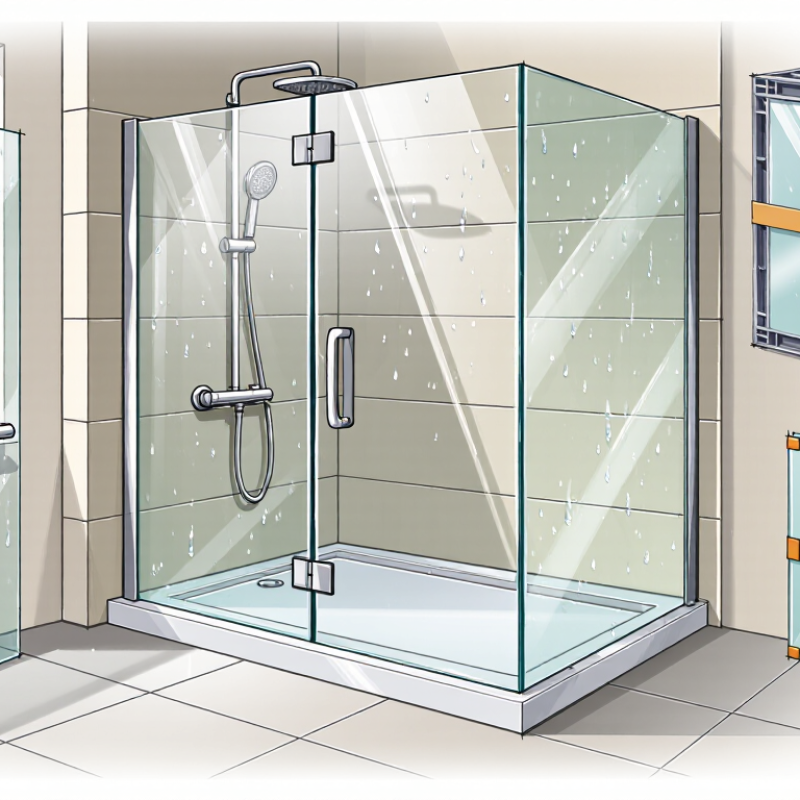
Define Your Shower Glass Requirements and Installation Conditions
Define Your Shower Glass Requirements and Installation Conditions
Global buyers should define the shower glass before comparing prices. Measure the finished opening at the top, middle, and bottom. Walls often vary by several millimetres, especially after tile installation. Record height, width, glass thickness, door swing, and hardware position. Choose safety glazing that meets the destination market’s requirements, such as tempered glass tested to ANSI Z97.1 or an equivalent local standard. Tempered glass is strong, but it is not damage-proof. Edge chips can cause sudden failure.
Tip: Confirm the installation surface first. A glass panel cannot correct a badly sloped floor, weak wall, or missing waterproof layer. Ask the installer to verify wall plumb, blocking, drainage, and silicone compatibility. The 2024 U.S. Houzz Bathroom Trends Study reported that 37% of renovating homeowners enlarged their shower area. Larger openings may improve comfort, yet they can require heavier panels and stronger support. This is where attractive drawings sometimes become impractical.
Tip: Specify glass type, thickness, finish, tolerance, packing, and inspection documents in writing. Low-iron glass offers clearer colour, while patterned glass can improve privacy but may need more cleaning. ASTM C1048 and relevant national standards provide useful reference points for heat-treated glass. Still, standards do not replace site judgment. I have seen projects fail because buyers measured before tiling, then treated the first dimension as final. Leave room for real-world variation.
| No. | Buying Dimension | Recommended Specification or Data | Installation Condition to Confirm | What to Check Before Ordering | Buyer Action |
|---|---|---|---|---|---|
| 1 | Glass Safety Type | Use safety glazing for shower enclosures. Fully tempered glass is commonly selected because it is heat-treated and designed to break into smaller, less sharp fragments than ordinary annealed glass. | Confirm that the glass will be used in a wet-area enclosure, door, fixed panel, or partition where impact and human contact are possible. | Request safety-glazing documentation and confirm compliance with the standard required in the destination market, such as EN 12150 or ANSI Z97.1 and applicable safety-glazing regulations. | Specify safety glass only in the purchase order. |
| 2 | Glass Thickness | Common shower-enclosure thicknesses are approximately 6 mm, 8 mm, and 10 mm. Thicker glass generally provides greater rigidity but also increases weight and hardware loads. | Consider panel size, unsupported span, door width, hinge capacity, frame or frameless design, and the required installation tolerances. | Check the approved system design and hardware load rating rather than choosing thickness by appearance alone. | Record thickness in millimetres and confirm its compatibility with all fittings. |
| 3 | Panel and Door Dimensions | Provide finished glass dimensions, panel quantity, door handing, cut-outs, holes, notches, and edge details. Glass must be processed before tempering because tempered glass cannot normally be cut or drilled afterward. | Walls, floors, and finished tile surfaces may not be perfectly square or plumb. The actual opening should be measured after the relevant finishes are installed. | Use a dimensioned drawing showing overall height, width, diagonals, wall angles, plumbing locations, and the clearance between glass and surrounding surfaces. | Approve a final shop drawing before fabrication. |
| 4 | Door Configuration | Select hinged, pivot, sliding, or folding construction according to available space, access requirements, and hardware suitability. A shower door should open without striking nearby fixtures. | Check the door swing, entry width, ceiling height, return panels, towel bars, toilets, basins, and other obstructions. | Mark the complete opening arc or sliding path on the layout and verify that the selected hinges, rollers, and handles support the glass weight. | Supply a plan view and elevation with the opening direction clearly marked. |
| 5 | Edge and Corner Treatment | Specify polished, seamed, or otherwise finished exposed edges. Exposed corners should be eased or rounded where required by the design and safety assessment. | Identify every exposed edge, corner, notch, and hole, especially on frameless panels and doors. | Confirm edge finish, corner radius, hole diameter, hole-to-edge distance, and compatibility with the hardware manufacturer’s installation requirements. | Add an edge-treatment schedule to the approved drawing. |
| 6 | Glass Appearance and Privacy | Choose clear, low-iron, patterned, frosted, or acid-etched appearance according to light transmission, privacy, maintenance expectations, and visual design. | Review the effect of bathroom lighting, wall color, water deposits, fingerprints, and privacy needs at different viewing angles. | Request a physical sample or approved reference showing color, texture, transparency, surface orientation, and acceptable visual tolerances. | Approve the exact glass appearance before mass production. |
| 7 | Surface Protection and Cleaning | A protective coating may help reduce water-spot adhesion, but it does not make glass maintenance-free. Routine cleaning remains necessary. | Confirm local water hardness, soap residue, cleaning chemicals, ventilation, and access to both sides of each panel. | Obtain written care instructions, coating limitations, compatible cleaners, warranty conditions, and any recommended reapplication interval. | Compare lifetime maintenance requirements, not only the initial coating cost. |
| 8 | Hardware and Load Compatibility | Hinges, clamps, channels, rollers, handles, seals, and support bars must match the glass thickness, panel weight, hole pattern, and corrosion environment. | Wet rooms require materials and finishes suitable for repeated moisture exposure. Substrate strength is also important for hinges, clamps, and support bars. | Check hardware load ratings, fixing type, fastener material, seal compatibility, adjustment range, and installation instructions. | Order glass and hardware as one coordinated system where possible. |
| 9 | Water Containment and Sealing | Define required seals, sweeps, thresholds, wall channels, overlaps, and drainage direction. Glass alone does not provide a watertight enclosure. | Verify floor slope toward the drain, threshold height, wall flatness, joint width, waterproofing, and the location of shower spray. | Review section details showing glass-to-wall, glass-to-floor, door-to-panel, and door-to-threshold sealing arrangements. | Confirm that the enclosure design controls splash water without blocking drainage or creating trip hazards. |
| 10 | Packaging, Logistics, and Site Readiness | Tempered glass is strong in normal service but vulnerable to edge damage. Packaging should protect edges, corners, surfaces, and hardware during handling and transport. | Confirm crate dimensions, lifting route, unloading equipment, storage position, weather protection, installation access, and final inspection timing. | Define inspection procedures for chips, cracks, scratches, wrong dimensions, missing hardware, and moisture damage before installation. | Keep glass upright, protected, and separated from hard surfaces; document damage before installation. |