CUSTOMISE Your Tiny Home - Call us now!

How to Find the Best Barbed Wire for Sale

Choosing barbed wire for sale is not just a price comparison. The right option depends on the fence’s purpose, the terrain, and the conditions it must withstand. A boundary across open pasture may need different wire from a fence around a compact livestock area. Getting those details wrong can mean extra repairs, sagging strands, or an unsuitable barrier.

Start by checking the wire’s material, strand construction, barb spacing, and protective coating. Galvanized steel is commonly selected for outdoor use because its coating helps resist corrosion, though product quality and exposure conditions vary. Compare the stated wire gauge and roll length, too. A label can look reassuring, but clear specifications matter more than confident sales language. They really do.

Consider how the wire will be installed and maintained. Uneven ground, corner posts, and long fence runs can affect tension and durability. For livestock fencing, assess the animals, fence layout, and advice from an experienced installer; barbed wire is not appropriate for every setting. Follow product guidance and applicable local requirements, and use suitable protective equipment during handling. A sharp barb can catch a glove or sleeve in a moment.

This guide explains how to compare barbed wire for sale, evaluate suppliers, and match product features to practical needs. It also considers value beyond the roll’s sticker price, including delivery, consistency, and replacement needs. There is no perfect choice for every property. Sometimes the overlooked detail is the one that matters most.
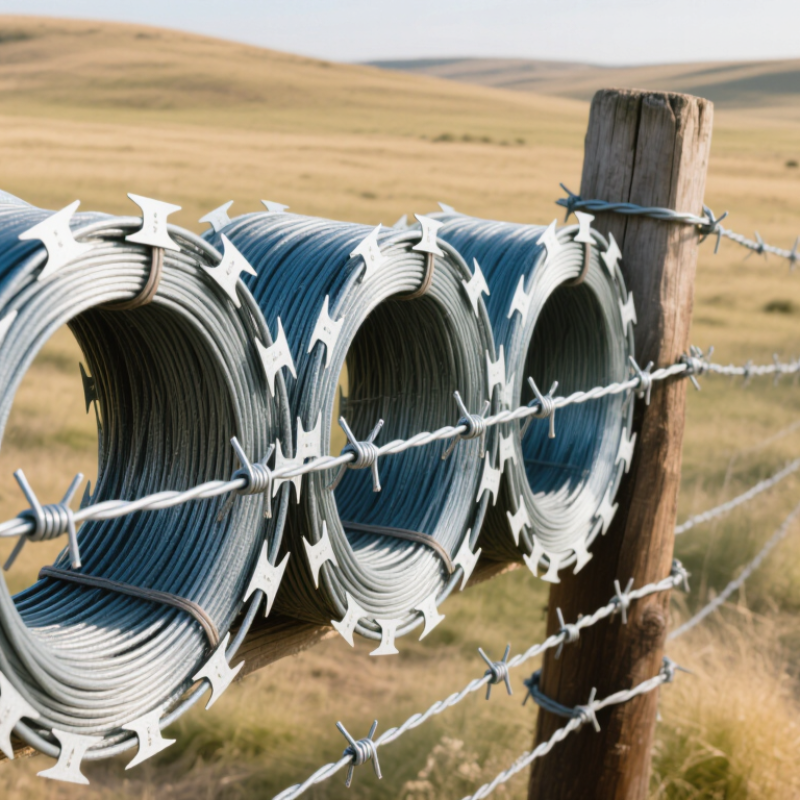
How to Find the Best Barbed Wire for Sale

Define the Intended Use and Site Conditions

How to Find the Best Barbed Wire for Sale

Define the Intended Use and Site Conditions

Start by deciding what the fence needs to do. A boundary for cattle may require different spacing and tension than a fence intended to mark a property edge. Consider the animals, nearby foot traffic, and how often the fence will be checked. Barbed wire is not a substitute for sturdy posts or regular inspection. Small gaps can matter.

Walk the site before choosing a product. Note slopes, soft soil, drainage, and places where branches may rub against the wire. In damp or coastal areas, corrosion resistance deserves extra attention. For long runs, check that the wire’s strength and construction suit the planned post spacing. Ask a fencing professional if the terrain is uneven or the intended use is unclear.

Think about maintenance, too. Can you reach the fence easily after storms? Will vegetation need frequent trimming? A specification that looks suitable on paper may prove awkward on a rocky slope. I have found that overlooking access can turn a simple inspection into a slow chore. Check local requirements and consider warning signs where people may approach the fence. No fence is perfect. Choose for the real site, not an ideal one.

Compare Barbed Wire Types, Materials, and Specifications

When comparing barbed wire for sale, match the wire type to the fence’s purpose and site conditions. Conventional low-carbon wire is flexible and often easier to handle, while high-tensile wire can span longer distances with less sag when installed with suitable posts and tension. It is not automatically the better choice. Rocky ground, sharp bends, and uneven corners can complicate installation.

Material and coating affect service life. Galvanized steel resists corrosion, but coating thickness varies; coastal air and damp soil may call for stronger corrosion protection. PVC-coated wire adds another protective layer, though cuts can expose the steel beneath. Check the wire diameter, tensile strength, strand count, and barb spacing on the specification sheet. Gauge numbers can be confusing, so compare actual diameter when possible. Check the label.

I still catch myself comparing price before checking the coating and strength. That shortcut can mislead. A heavier-looking strand may not last longer if its coating is thin or the specifications are unclear. Measure the fence run, note slopes and corners, and estimate how much tension the structure can safely hold. Gloves matter during handling. Not optional. Ask the seller for written specifications rather than relying on a product photo; close-up images rarely show coating quality or consistent barb spacing.

Assess Safety, Durability, and Installation Requirements

Choosing barbed wire means looking beyond price and appearance. Check the fence line first: children, pets, and workers may pass nearby, so placement and visibility matter. Wear sturdy gloves and eye protection during handling; cut ends can spring back. Not just the price. Ask suppliers for wire gauge, coating type, and intended use, then compare like with like.

Durability depends on both material and conditions. Galvanized wire can resist corrosion, but salt air, persistent moisture, and damaged coating may shorten its life. Look for consistent coating and smooth, secure splices. A thicker wire is not automatically the best choice; suitability depends on the posts, span, and expected strain. Inspect samples closely. Small details matter.

Installation requirements can change the total cost. Posts need suitable spacing and firm anchoring, while corners and changes in slope may need extra support. Keep the wire taut, not overstretched, to reduce sagging and stress on posts. Check the route for gates, drainage, and regular access before ordering. A common mistake is estimating length from a map; uneven ground can add slack and waste. If the layout or tensioning is unfamiliar, get qualified help rather than improvising around sharp wire.

Evaluate Suppliers, Pricing, and Product Documentation

A dependable barbed-wire quote should describe the product, not just the roll price. Compare wire gauge, barb spacing, roll length, tensile strength, and metallic-coating requirements. Ask for a current specification sheet and batch-linked test records. ASTM A121 covers metallic-coated carbon-steel barbed wire, giving buyers a useful reference when checking stated construction and coating details. A certificate without matching lot numbers is less reassuring. Details matter.

Compare like with like. A low price per roll can hide shorter lengths, lighter wire, or freight charges. Request the price per metre or kilogram, then confirm packaging, delivery terms, and quote validity in writing. The USDA’s 2022 Census of Agriculture counted about 1.9 million U.S. farms across roughly 880 million acres, illustrating the scale of agricultural fencing needs. That figure does not predict local demand or prices. The World Steel Association reported 1,892.2 million tonnes of crude steel production worldwide in 2023; this is useful supply-chain context, not a barbed-wire price forecast. Be cautious about treating broad steel statistics as proof that a supplier’s quote is fair. Ask how the product was tested, whether coating results are traceable to the shipment, and what happens when delivered measurements differ. A neat datasheet helps. So does a plain, itemized quote.

How to Find the Best Barbed Wire for Sale - Evaluate Suppliers, Pricing, and Product Documentation
Supplier Type Product to Compare Common Specification Checks Indicative U.S. Price Range Documentation to Request Evaluation Notes
Farm and ranch fencing supplier Galvanized, two-point barbed wire for general livestock fencing Wire gauge; barb spacing; coil length; galvanizing coating; stated tensile strength About $90–$180 per 1,320-foot coil Product specification sheet; coating information; coil length and weight; written warranty Confirm the stated length and wire construction. Compare delivered cost, not just the listed coil price.
Industrial fencing distributor High-tensile galvanized barbed wire for longer fence runs Steel grade; tensile-strength rating; wire diameter; barb spacing; recommended post spacing About $110–$230 per 1,320-foot coil Technical data sheet; tensile-strength documentation; coating details; installation guidance Check that the fence posts and tensioning hardware are suitable for the selected wire and installation conditions.
Coated-wire supplier PVC-coated barbed wire for applications requiring an additional protective coating Core-wire gauge; coating material and thickness; color; UV and corrosion-resistance claims About $140–$300 per 1,320-foot coil Product data sheet; coating specifications; care instructions; warranty terms Ask whether quoted dimensions refer to the steel core or the finished coated wire.
Regional agricultural wholesaler Bulk galvanized barbed wire for multi-coil projects Coils per pallet; coil length; packaging; order minimum; lot consistency About $80–$170 per 1,320-foot coil before freight, subject to order volume Formal quotation; packing list; product specifications; shipping terms; return policy Request a complete landed-cost quote that includes freight, taxes, pallet charges, and any minimum-order fees.
Specialty fencing supplier Stainless-steel barbed wire for specific corrosion-sensitive environments Stainless-steel grade; wire diameter; barb construction; intended exposure conditions Quote required; typically substantially higher than galvanized steel Material certificate; grade declaration; product data sheet; warranty and application limitations Verify the stated steel grade and suitability for the actual environment before comparing price.
Any supplier under consideration Comparable offer for the same wire construction and quantity Confirm matching gauge, barb spacing, coating, coil length, tensile rating, and quantity Compare like-for-like quotes in the same currency and unit Written quotation; current specification sheet; delivery estimate; payment and warranty terms Check stock status, lead time, damage-on-arrival process, and whether quoted specifications are guaranteed.
Price guidance: The ranges above are indicative planning estimates in U.S. dollars, not live supplier quotations. Actual prices vary by specification, order volume, region, freight, and market conditions. Confirm current pricing and applicable fencing requirements with the supplier and local authorities.

Select the Best Option and Verify Local Requirements

Before comparing barbed wire for sale, check the rules that apply to your exact property. Rules vary. Contact your local building or planning office and ask about fence height, setbacks, permitted locations, and any warning-sign requirements. If the boundary is shared, confirm its position with a current survey or a qualified local professional. A neighbor’s old fence is not reliable proof of the property line.

Then match the wire to the job. For livestock, consider animal type, fence length, weather exposure, and whether the fence will be easy to inspect. Compare strand count, wire gauge, coating, and roll length on product specifications, rather than judging by appearance alone. Galvanized wire may suit exposed sites, but harsh coastal conditions can still shorten its service life. Small details matter.

Before ordering, ask the supplier for written specifications and verify that the product suits your planned installation and local requirements. Check whether your area restricts barbed wire near roads, footpaths, homes, or shared boundaries. Requirements can be unclear, and I would not assume a verbal answer settles the issue. Keep the office’s guidance and product details with your project records. If the rules remain uncertain, pause the purchase and request clarification in writing.

How to Find the Best Barbed Wire for Sale

Compare barb spacing when evaluating wire options. The chart shows the number of spacing intervals in 10 feet, calculated from each spacing measurement.

Before buying: Confirm the wire’s material, gauge, barb configuration, and intended use with the seller. Check local rules on fencing, property boundaries, and permitted uses, since requirements vary by location.