How to Choose Thin High Performance Insulation for Your Projects?
Choosing the right insulation for your projects is crucial. Among various types available, Thin High Performance Insulation (THPI) offers unique advantages. According to a report by the Department of Energy, THPI can significantly reduce energy loss. This is important as buildings account for nearly 40% of energy consumption in the United States.
Architects and engineers often face challenges when selecting insulation. Traditional options can consume unnecessary space and add weight. In contrast, THPI provides optimal thermal resistance in a compact form. Studies show that using THPI can lead to a 30% improvement in energy efficiency. However, not all THPI products are created equal, making it essential to weigh factors like thermal resistance, ease of installation, and long-term performance.
Deciding on insulation isn't straightforward. The right choice may differ based on climate, building type, and usage. As the industry evolves, so do insulation technologies. It’s vital to remain informed about the latest developments in THPI. Effective decision-making hinges on quality data and professional insights. Careful evaluation of options will lead to a more sustainable and efficient future.
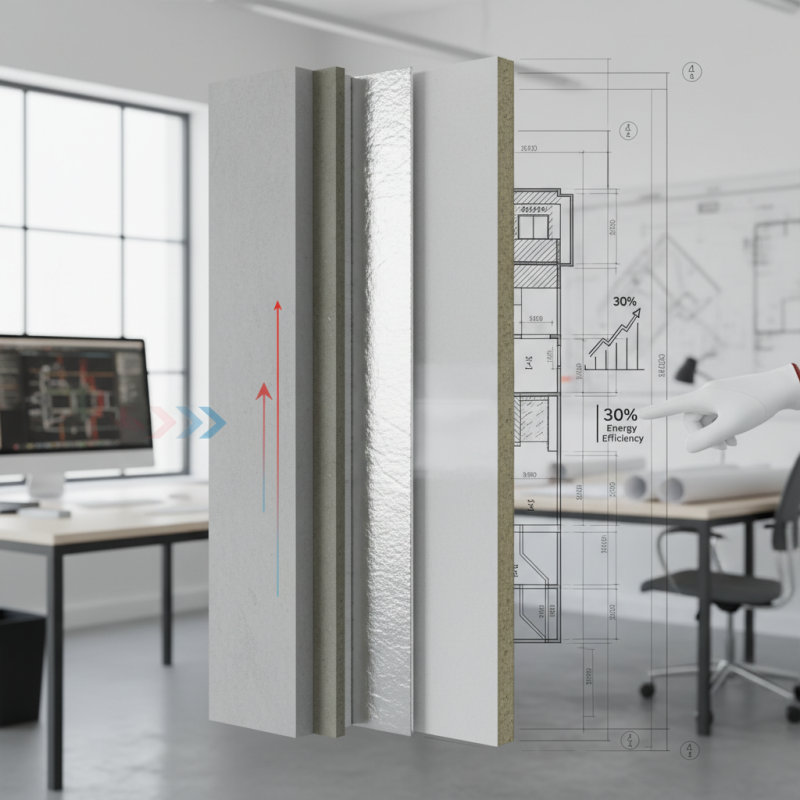
Understanding the Basics of Thin High-Performance Insulation
When considering thin high-performance insulation, understanding the basics is crucial. This insulation type is designed to provide high thermal resistance while maintaining a slim profile. Various materials contribute to its effectiveness, including foam, fiberglass, and reflective membranes. Each material has unique properties that can influence its application and performance.
One important aspect to consider is the R-value, which measures insulation effectiveness. A higher R-value indicates better thermal resistance. However, achieving high R-values with thin materials can be challenging. Sometimes, thinner insulation may not meet specific building codes or efficiency standards. It's essential to evaluate whether the chosen material aligns with your project goals.
Additionally, environmental factors play a significant role in insulation performance. Local climate conditions impact how well insulation performs. In humid areas, moisture resistance becomes a concern. In colder climates, thermal bridging may lead to energy loss. Identify these factors to ensure your insulation choice is reliable in real-world conditions. Engaging with professionals or conducting in-depth research can help inform your selection process.
Evaluating Insulation Materials for Thermal Efficiency and Performance
When evaluating insulation materials, thermal efficiency is crucial. A 2020 report from the U.S. Department of Energy revealed that insulation can significantly reduce energy costs. Inattentive choices can lead to subpar performance and unnecessary expenses. Selecting the right material for your project demands careful consideration.
Thin high-performance insulation options often include aerogels and closed-cell foam. These materials provide excellent R-values while occupying minimal space. For instance, aerogels can achieve R-values of up to 10 per inch. However, their high cost may limit accessibility. Moreover, closed-cell foams typically offer durability and moisture resistance, essential in various climates.
Understanding local building codes and climate conditions is vital. Certain materials perform better in specific environments. For example, materials that excel in dry conditions may struggle in areas with high humidity. Conducting a detailed performance analysis is essential. Evaluate installation requirements and potential downsides. The goal is to balance cost, efficiency, and adaptability.
How to Choose Thin High Performance Insulation for Your Projects?
| Insulation Material | Thermal Conductivity (W/mK) | Thickness (mm) | R-Value | Applications |
| Polyisocyanurate (PIR) | 0.022 | 50 | 2.27 | Roofing, Walls, Refrigeration |
| Expanded Polystyrene (EPS) | 0.035 | 75 | 2.14 | Floors, Walls, Insulated Panels |
| Mineral Wool | 0.035 | 100 | 2.86 | Commercial Buildings, Roof Insulation |
| Vacuum Insulation Panels (VIP) | 0.004 | 20 | 5.00 | High-Performance Buildings, HVAC Equipment |
| Aerogel | 0.013 | 10 | 7.69 | Oil and Gas Pipelines, Aerospace |
Key Factors to Consider When Choosing Insulation Thickness
Choosing the right insulation thickness for your project is crucial. The insulation thickness greatly affects energy efficiency and comfort. It's essential to assess your climate zone and the specific requirements of your building. A thicker insulation may be beneficial in extreme climates. However, it can add unnecessary costs in milder areas.
Consider the R-value, which measures thermal resistance. Higher R-values indicate better insulating properties. For colder climates, thicker insulation is often necessary to retain heat. In warmer areas, thinner insulation may suffice. Therefore, understanding local weather patterns is important.
**Tip:** Always consult building codes to ensure compliance. This can prevent costly errors and enhance safety.
Another factor is space constraints. In tight areas, choosing thinner insulation may allow for more usable space. Think about the intended use of the area. A more spacious design could be favored in relaxation spaces. On the other hand, utility rooms might require less insulation.
**Tip:** Perform energy audits to assess your current insulation efficiency. This can reveal areas that need improvement or adjustment. Reflect on whether your existing setup meets your comfort standards.
Insulation Thickness Comparison for High Performance Projects
Applications and Use Cases for Thin High-Performance Insulation
In construction and design, thin high-performance insulation has gained traction for various applications. It is particularly beneficial in retrofitting existing buildings. According to the U.S. Department of Energy, up to 25% of energy loss occurs through poorly insulated walls. Thin insulation can effectively reduce this loss while maintaining required space.
Another key application is in industrial settings. Industrial processes often require precise temperature control. Reports indicate that adding just 1 inch of high-performance insulation can save up to 20% on energy bills annually. This is crucial for manufacturers seeking to reduce operational costs. However, integrating thin insulation requires careful planning. The placement and environmental factors must be considered.
Transport sectors also benefit from this technology. Lightweight vehicles and ships equipped with high-performance insulation show a significant reduction in fuel consumption. Data from the International Energy Agency highlights that optimized insulation can lead to up to 30% savings. It's important to note that measuring thermal performance can be challenging. Testing under real-world conditions often reveals discrepancies between expected and actual performance. This warrants further investigation and adjustment in application methods.
Comparing Cost vs. Benefits of Thin Insulation Options in Projects
When evaluating thin insulation options, cost versus benefits is crucial. A report from the American Society of Heating, Refrigerating and Air-Conditioning Engineers (ASHRAE) reveals that energy savings from high-performance insulation can offset initial costs within three to five years. However, the upfront investment can be significant, potentially leading to budget constraints. Professionals must weigh these aspects carefully.
One effective approach is to analyze the specific R-value needed for the project. Higher R-values often equate to greater thermal resistance, leading to energy efficiency. Yet, not all projects require the same performance level. Understanding project demands can mitigate wasteful spending.
Tips for selection:
- Always consider long-term savings over initial costs.
- Seek insulation with high durability ratings; they perform better over time.
- Assess local climate conditions; some products work better in specific environments.
Balancing cost and benefits is not linear. Sometimes, opting for a slightly more expensive insulation can yield greater savings in the long run. The choice must align with project goals and resource availability.


