How to Choose the Best Portable Drill for Your Needs?
When it comes to woodworking or home improvement, choosing the right Portable Drill is crucial. A portable drill offers versatility and convenience, making it an essential tool for both professionals and DIY enthusiasts. However, with so many options on the market, selecting the best one can be challenging.
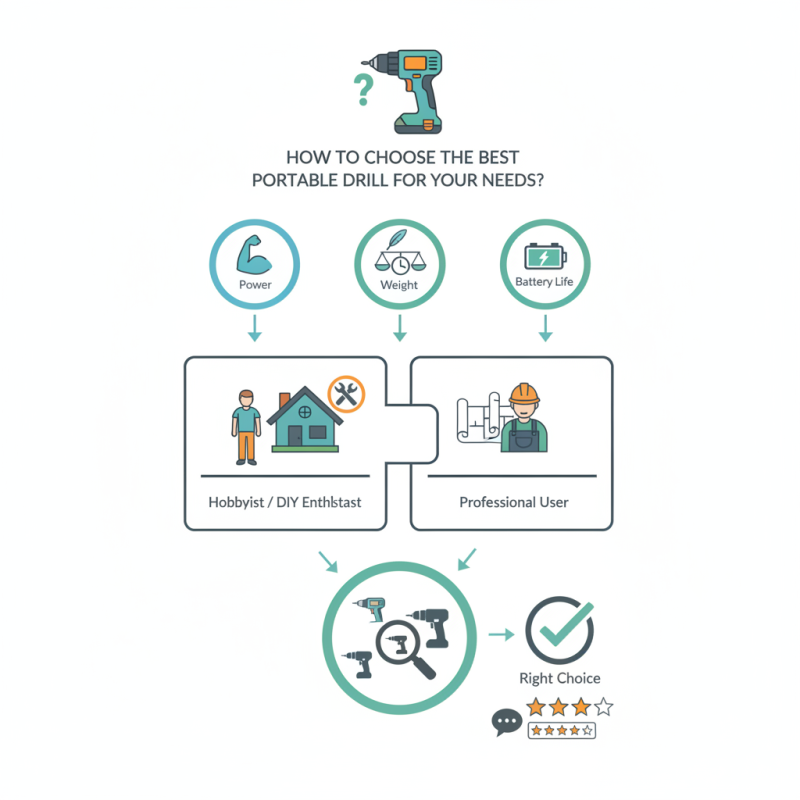
You need to consider several factors, such as power, weight, and battery life. A powerful motor ensures efficient drilling through various materials. On the other hand, weight matters significantly for extended tasks. A lightweight tool helps minimize fatigue during use. Battery life is also a vital aspect; a longer-lasting battery allows for uninterrupted work.
Additionally, think about your specific needs. Are you a hobbyist or a professional? Reflecting on your goals can guide you to the right choice. Each portable drill has unique features, which may not suit everyone. Take time to research and compare options. Sometimes, even popular brands may not meet individual requirements. Exploring reviews can also provide insights, but remember to weigh their relevance to your context.
Understanding Power Ratings: Watts and Voltage in Portable Drills
When selecting a portable drill, power ratings are crucial. Understanding watts and voltage can significantly impact your choice. Generally, higher wattage indicates more power. A drill with 500 watts typically offers sufficient performance for most home projects. Yet, the nature of your tasks also matters. For heavy-duty applications, consider models that exceed 700 watts.
Voltage plays a vital role too. Most Cordless Drills range from 12V to 20V. A 20V drill can handle tougher materials more efficiently. This extra voltage enhances torque output, which is essential for driving screws into hard surfaces. Research indicates that a 20V model may provide up to 30% more torque than its 12V counterpart. However, don’t overlook the weight. Higher voltage batteries often mean a heavier drill, which could affect comfort during prolonged use.
Moreover, users suggest that striking a balance between power and weight is key. A powerful drill might be too bulky for precise tasks. At times, you might need a lighter model for easy maneuverability. Thus, understanding the power ratings of drills can steer you towards a machine that fits your specific needs and tasks, ensuring efficiency and comfort.
Types of Portable Drills: Corded vs. Cordless Overview
When choosing between corded and cordless drills, it's crucial to understand their unique features. Corded drills typically provide continuous power, making them ideal for heavy-duty tasks. Their higher torque capabilities can handle demanding jobs, which is vital in professional settings. If you plan to work on extensive projects, a corded drill might be your best option.
On the other hand, cordless drills offer unmatched portability. They are easy to use in tight or remote spaces where outlets are unavailable. Recent data indicates that 60% of DIY enthusiasts prefer cordless models for residential projects. This trend highlights the importance of flexibility in home improvement. However, keep in mind that battery life can limit usage time. Users often find themselves needing to pause for recharging, which can disrupt workflow.
It's also worth noting that cordless drills have improved significantly in battery technology. Many now feature lithium-ion batteries that provide longer usage times. However, these advancements can come at a higher initial cost. Additionally, some users report challenges in finding the right balance between power and weight, especially in smaller models. As with any tool, considerations like personal comfort and intended use are essential for finding the right fit.
Comparison of Corded and Cordless Drills
Key Features to Evaluate: Chuck Size, Speed Settings, and Torque
When selecting a portable drill, understanding key features is crucial. Chuck size directly impacts the drill's versatility. A larger chuck can accommodate more bit sizes. This allows for various tasks, from drilling small holes to larger applications. However, smaller chucks are often lighter and more portable. Reflect on your typical projects. Which chucks do you frequently use?
Speed settings vary widely between models. A drill with multiple speed options can be beneficial for different materials. Low speeds are ideal for tougher surfaces, while higher speeds work well for softer materials. This flexibility can make a large difference in efficiency. Experimenting with speed settings can lead to mistakes, but it’s part of the learning process.
Torque is another essential feature to evaluate. Higher torque means the drill can handle tougher tasks without stalling. This is particularly important for heavy-duty projects. Consider how much torque you need for your usual jobs. Remember that high torque can also lead to control challenges. Finding the balance is key, and practice may reveal new insights into your choices.
Assessing Battery Life and Runtime in Cordless Models
When choosing a portable drill, understanding battery life is essential. Cordless models rely entirely on their batteries for performance. A drill that lasts longer between charges will enhance productivity. Assess the voltage and capacity of the battery, as these factors directly impact runtime. Typically, a higher voltage means more power. But consider how that power aligns with your specific tasks.
Look for models that provide real-world runtime stats. Some brands may exaggerate battery life in ideal conditions. Check user reviews for insights on how well a drill performs under various workloads. You want a tool that won't fail you during critical moments.
Tip: Realize that battery efficiency can be affected by temperature. Extreme cold or heat can drain a battery faster. Choose a drill that can handle various environments. Keep spare batteries charged and ready. This approach ensures you have backup power during extensive projects. Adapting to these realities can save time and stress in your work.
Selecting the Right Accessories: Bits, Cases, and Maintenance Tools
When selecting portable drill accessories, bits are crucial. Choosing the right bits makes all the difference. Different projects require various materials like wood, metal, or masonry. A good set of bits should cover these needs. Look for high-speed steel or titanium-coated options for durability. However, it’s easy to overlook the importance of choosing the right size. Using the wrong size can lead to stripped holes or damaged workpieces, so keep a variety handy.
Cases for your drill and accessories can enhance organization. A sturdy case protects your tools from damage and makes transport easier. Many cases have designated slots for bits and other parts. This prevents loss and keeps everything organized. Yet, not all cases are created equal. Some may not fit well if you have larger accessories. Take time to evaluate your specific needs.
Maintenance tools are often neglected but essential. Lubricants keep moving parts functioning smoothly. Basic cleaning tools can prolong the life of your drill. Neglecting maintenance leads to inefficiency and frustration. Regular checks can prevent breakdowns, but many users forget this step. Keep a simple checklist for maintenance to help remember. This small effort can ensure your drill stays reliable.


