How to Choose the Best Folding Gazebo for Your Needs
A Folding Gazebo can turn a sunny market stall, garden lunch, or weekend campsite into a more comfortable place to gather. But the right choice depends on more than its listed footprint. Think about who will set it up, how often it will travel, and the conditions it is expected to handle. A compact frame may fit a car easily, yet offer less room for chairs, tables, or movement. Small details matter.
This guide explains how to compare canopy size, frame materials, fabric, setup style, portability, and useful accessories. Check the manufacturer’s dimensions and care instructions, and distinguish water resistance from protection in severe weather. Wind exposure, secure anchoring, and local conditions deserve equal attention; no pop-up shelter should be treated as storm-proof unless its specifications clearly support that use. Look closely. A product can be “portable” and still feel cumbersome after a long walk from the parking area. Consider whether replacement parts are available, too.
There is no perfect choice, and pretending otherwise would be unhelpful. A sturdy model may weigh more, while a lighter one may need gentler handling. Compare warranty terms and product specifications, then match those details to your actual plans—not an idealized checklist. A little uncertainty is reasonable; real weather and uneven ground can challenge even a well-chosen shelter. This guide offers a practical way to weigh the trade-offs before spending. That is the point.
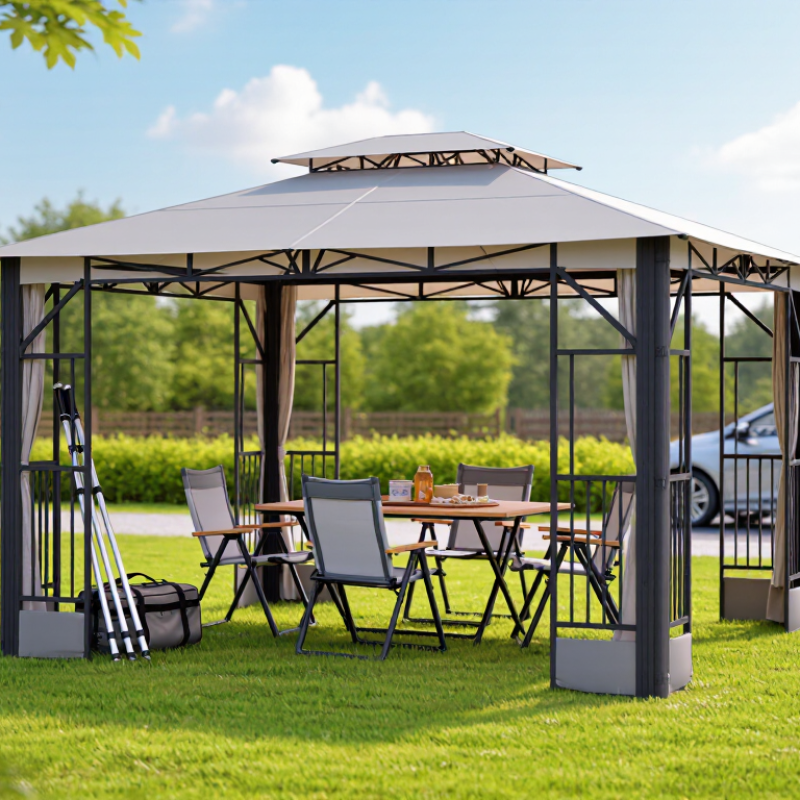
Identify Your Intended Uses and Typical Setup Locations
Before choosing a folding gazebo, picture where you will use it most. A garden gathering needs room for chairs and a clear path around the table. At a weekend market, you may need space for display tables and customers to move comfortably. Measure the usable area, not just the open patch of ground. Check for low branches, nearby walls, and doors that need to swing freely. Wind changes everything. An exposed lawn can feel very different from a sheltered patio.
Think about how often you will set it up and who will help. If one person usually handles the frame, practice opening and closing it before relying on it for an event. Notice the weight, packed size, and time needed to secure each leg. For beaches or parks, check the site’s surface and whether suitable anchoring points are available. Soft ground, paving, and uneven grass each call for different setup choices. I once underestimated the space needed for people to pass behind a table; it made the layout feel cramped.
Tips
Measure the setup area and the packed storage space. Take a quick photo of your usual location, including overhead obstacles. If you are unsure about the layout, mark the corners with tape or small objects before setting up. Measure twice.
Compare Frame Designs and Canopy Materials
A folding gazebo’s frame determines how quickly it opens, how steady it feels, and how much effort packing takes. Steel frames often feel substantial and suit frequent setups, but they can be heavy to carry. Aluminum is lighter and easier to move, though thin tubing may flex under pressure. Check the joints, leg locks, and replacement-part availability, not just the frame material. A lock that catches smoothly matters. Scissor-style frames usually open quickly, while simpler hinged designs may need more careful alignment. A heavier frame is not automatically better; it may become a nuisance on a long walk from the car.
Canopy fabric shapes comfort and durability. Polyester is common because it balances weight and weather resistance; a coating can improve water shedding, but seams and stitching still need inspection. Look for clear fabric weight, UV protection details, and reinforced corners. Those details matter. Vent panels can reduce trapped heat, especially on sunny afternoons, but they may let in wind-driven rain. No portable gazebo should be treated as shelter in severe wind. It is easy to focus on fabric thickness and overlook the frame’s stability. Compare the whole setup, then consider where you will use it, how often you will carry it, and whether one person can manage the packed size.
How to Choose the Best Folding Gazebo for Your Needs: Frame and Canopy Comparison
Frame: Steel is denser and often chosen for sturdiness; aluminum is much lighter, which can make transport easier. These figures describe material density, not the weight of a complete frame—design and tube thickness matter too. Canopy: Polyester is a common lightweight option; polyethylene is often an economical choice; PVC-coated polyester is typically heavier. Check the product’s UV protection, fabric weight, water-resistance details, and seam construction, since performance varies by model.
Choose a Suitable Size, Weight, and Setup Mechanism
A 10-by-10-foot folding gazebo offers 100 square feet of shade, but usable space shrinks once chairs, a cooler, and walking room are added. For four seated guests, sketch the layout before buying; a table can make that footprint feel tight. The Outdoor Industry Association’s 2024 Outdoor Participation Trends Report counted 175.8 million U.S. outdoor participants in 2023. That broad demand spans campsites and backyards, so choose dimensions for your actual setting, not an average user.
Weight matters when the gazebo must travel from a car to a beach or field. Check the packed weight, not just the frame weight, and consider whether one person can carry it alongside stakes and a storage bag. Lighter is easier to move, but it is not automatically better in gusts. The National Weather Service’s Beaufort scale classifies 25–31 mph winds as a strong breeze; this is not a gazebo safety rating. Follow the product’s wind guidance, secure every leg, and take it down when conditions exceed its limits.
Setup mechanisms deserve a hands-on test. Pop-up frames can be quick, yet stiff joints or awkward locks may frustrate one person. Practice opening and folding the unit at home, ideally with the same number of helpers you expect outdoors. I still find packed dimensions easy to overlook. Measure your trunk, too. A few extra minutes now can prevent a cramped trip and a rushed setup.
Assess Weather Protection, Stability, and Safety Features
A folding gazebo’s fabric should match the weather you expect, not every condition imaginable. Check whether the canopy is water-resistant or genuinely waterproof, and look for clear guidance on seams and drainage. A water-resistant roof may handle a brief shower but still leak during hours of steady rain. For sunny events, dense fabric can reduce glare and provide useful shade. Wind changes everything. Read the stated wind limits and setup instructions; a canopy is not a safe shelter during storms or strong gusts. If the forecast turns severe, take it down rather than trusting extra weights.
Stability depends on both the frame and the ground beneath it. Lock each frame joint fully, extend the legs evenly, and check that the canopy sits level. On pavement, use compatible weighted anchors; on suitable soil, secure the legs with stakes. Never assume the included kit fits every surface. Before guests arrive, inspect joints, feet, straps, and fabric for cracks, looseness, or fraying. Keep the entrance clear, and avoid placing the structure near overhead hazards. Small details matter. It is tempting to choose the lightest model for easy carrying, but a very light frame may feel less reassuring in breezy conditions. I’d compare the packed weight with the anchoring plan, not judge stability by appearance alone.
How to Choose the Best Folding Gazebo for Your Needs - Assess Weather Protection, Stability, and Safety Features
| Feature | What to Check | Practical Guidance | Safety Consideration |
|---|---|---|---|
| Rain protection | Fabric coating, seam construction, and whether the canopy is described as water-resistant or waterproof. | For occasional showers, a coated canopy may be sufficient. For sustained rain, look for clearly stated waterproofing details and sealed seams; performance varies by model. | Keep the roof taut and pitched so water can run off. Do not allow water to pool on the canopy. |
| UV and sun protection | Any stated UV-protection rating, fabric coverage, and availability of side panels. | Choose a canopy with documented UV protection for frequent sunny-day use. Side panels can provide extra shade, but may increase wind resistance. | A canopy does not eliminate all UV exposure. Follow sun-safety guidance and avoid relying on shade alone. |
| Frame and joints | Frame material, leg design, joint construction, and whether replacement parts are available. | A sturdier frame can be helpful for regular use, while a lighter frame is easier to carry. Check that the frame locks securely when opened. | Keep fingers clear of scissor joints and pinch points during setup and folding. Follow the assembly instructions. |
| Anchoring and stability | Included stakes or weights, anchoring options for different surfaces, and instructions for securing each leg. | Use suitable stakes on compatible soft ground and appropriate weights on hard surfaces. Follow the manufacturer's anchoring instructions for the specific gazebo. | Anchoring reduces movement but does not make a gazebo safe in every wind condition. Do not leave it unattended in changing weather. |
| Wind guidance | Whether the manufacturer provides a wind limit or operating guidance. | Wind tolerance differs by design, anchoring, and conditions. Check the model's instructions rather than assuming a general wind rating applies. | Take the canopy down when conditions exceed the stated guidance or become gusty. A folding gazebo is generally not intended as a permanent structure. |
| Fire and heat safety | Fabric fire-safety information and any applicable local requirements for the intended venue. | If using the gazebo at an event or commercial site, confirm that its documented fabric rating meets the venue's rules. | Keep grills, heaters, flames, and other heat sources away from the canopy unless the product instructions explicitly permit their use. |
| Size and clearance | Open footprint, peak and side height, and the space needed around the frame. | Measure the intended site and check that furniture, doors, and walkways will fit without blocking exits or access. | Set up on level ground and keep clear routes around the structure, especially in busy areas. |
| Setup and portability | Packed size, carry bag, setup instructions, and the number of people recommended for assembly. | For frequent transport, compare packed dimensions and total weight. Practise opening and closing the frame before using it at an event. | Secure the frame in its fully open position before attaching or adjusting the canopy, as directed in the manual. |
Note: Product features and safe operating limits vary. Check the specific gazebo's manual and follow local safety requirements.
Balance Cost, Maintenance, Storage, and Replacement Needs
How to Choose the Best Folding Gazebo for Your Needs
A folding gazebo should fit your routine, not just your budget. Compare the purchase price with likely upkeep: fabric may need cleaning, joints may need inspection, and damaged parts can affect stability. Check the maker’s care instructions and whether replacement canopies or connectors are available. A low price can be appealing, but replacing the whole frame after one worn component is frustrating. No option is perfect.
Tips: Measure your storage space before buying. Check the folded size, packed weight, and setup steps. After use, let the canopy dry fully before storing it to help limit mildew. Small habits matter.
Think about how often you will use it and where it will sit. Occasional backyard shade may not justify the cost of a heavy-duty frame. Frequent market or event use may make durable joints and replaceable fabric worth paying more for. Look for a clear parts list and realistic warranty terms, rather than relying on vague durability claims. Also consider whether you can carry and set it up comfortably; a sturdy shelter is less useful if it stays in the garage. It is easy to underestimate storage and maintenance. Revisit those needs before choosing.
