CUSTOMISE Your Tiny Home - Call us now!

China Best Aluminum Profiles for Sliding Doors?

Choosing the right China supplier for Aluminum Profiles For Sliding Doors requires more than comparing prices. Profile quality affects door strength, smooth movement, weather resistance, and long-term appearance. This guide examines practical factors that experienced buyers should consider before placing an order.

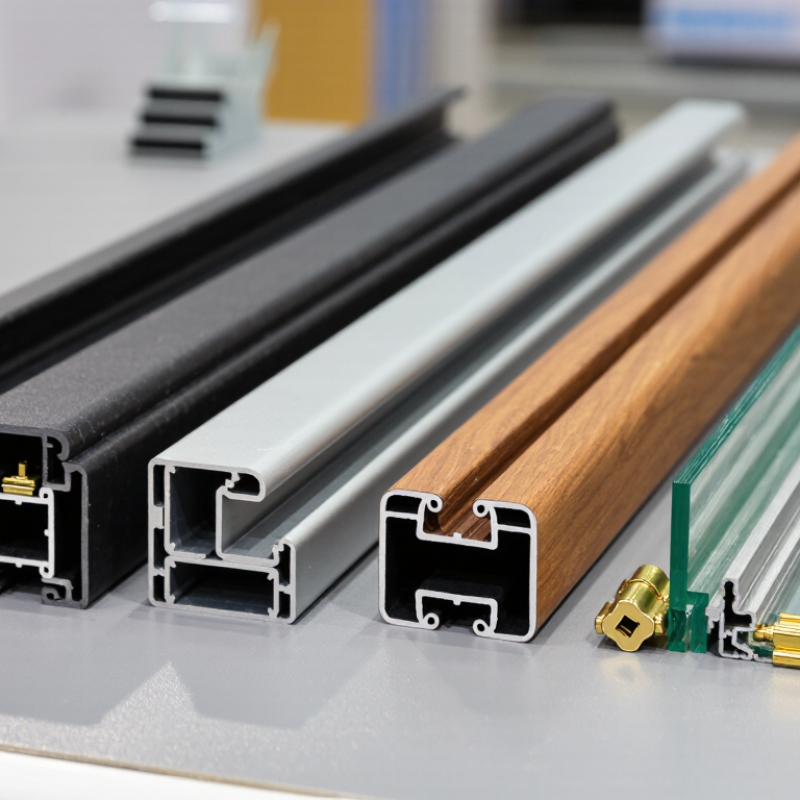
Details matter. We will look at common 6063-T5 and 6063-T6 aluminum alloys, profile wall thickness, extrusion accuracy, and surface treatment quality. A well-made profile should fit rollers, locks, glass, seals, and frame joints without forced adjustments. Powder coating, anodizing, and wood-grain finishes also deserve close inspection. Uneven color, sharp edges, or visible extrusion lines may indicate weak process control.

Performance comes first. Reliable Chinese manufacturers usually provide technical drawings, alloy information, finish samples, and inspection records. Buyers should request these documents and confirm them independently. Factory experience matters, but it does not replace physical testing. Ask for sample sections, corner connections, load evaluations, and corrosion-resistance evidence where appropriate. A supplier may claim excellent precision, yet small dimensional errors can create noticeable vibration during daily use. This guide is not perfect, because climate, installation skill, and building design change the final result. Still, it offers a practical framework for comparing manufacturers, checking product claims, and selecting profiles that balance durability, appearance, and cost. The best decision is rarely the cheapest quotation. It is the option supported by clear specifications, consistent samples, responsive engineering, and dependable quality control.
China Best Aluminum Profiles for Sliding Doors?

What Makes Aluminum Profiles Ideal for Sliding Doors in China?

Aluminum profiles suit sliding doors because they balance strength, weight, and weather resistance. In Chinese homes, slim frames can support wide glass panels without making rooms feel crowded. The International Aluminium Institute reports that building and construction uses about 25% of global aluminum demand. This reflects aluminum’s practical role in windows, doors, and façades.

A good profile should have a stable thermal break, accurate wall thickness, and reliable drainage channels. These details matter during humid summers and sharp winter changes. Industry testing reports commonly measure air leakage, water penetration, wind pressure, and operating force. In practice, installation quality can matter as much as the profile. A perfect frame still performs poorly when tracks are uneven.

Sustainability also strengthens the case. The International Aluminium Institute states that recycled aluminum needs roughly 5% of the energy used for primary aluminum production. That supports longer product cycles and lower material impact. However, recycling figures depend on collection systems and alloy separation. The number is useful, but not universal. For Chinese sliding doors, buyers should check alloy traceability, coating thickness, hardware compatibility, and test records. Small rollers, poor seals, and weak corners can quietly reduce comfort. A lower price may hide these weaknesses.

What Makes Aluminum Profiles Ideal for Sliding Doors?

Aluminum 6063 is widely used for architectural profiles because it combines low density with high thermal conductivity, good corrosion resistance, and reliable extrudability. The values below are typical reference values; actual performance varies by alloy, temper, profile design, surface treatment, and material formulation.

Key Materials and Specifications of Chinese Aluminum Door Profiles

China Best Aluminum Profiles for Sliding Doors?

Key Materials and Specifications of Chinese Aluminum Door Profiles

Chinese aluminum profiles for sliding doors commonly use 6063-T5 or 6063-T6 alloy. These grades balance extrusion quality, strength, and surface finish. For larger frames, 6061 may provide higher structural strength. However, it can be harder to extrude into complex shapes.

A reliable profile begins with controlled billet quality and accurate extrusion dies. Check the wall thickness carefully, especially around screw channels and roller housings. Typical residential profiles measure between 1.4 and 2.0 millimeters. Heavy sliding doors may require thicker sections. More metal is not automatically better. Poor geometry can still cause flexing.

Thermal-break doors use polyamide strips between the interior and exterior aluminum chambers. A 20 to 30 millimeter strip often improves insulation, but the complete system matters more. Ask for air, water, and wind-load test data. Glass thickness, gasket design, drainage holes, and roller capacity must match the frame. Small gaps can create noticeable drafts.

Surface treatment also deserves close inspection. Powder coating should show even color and strong adhesion. Anodizing needs consistent film thickness and clean edges. During sampling, measure corner joints, inspect cut surfaces, and operate the rollers repeatedly. We once found a smooth-looking profile with weak drainage design. It performed well in the showroom, but not during heavy rain. Specifications help, but practical testing reveals the uncomfortable details.

China Best Aluminum Profiles for Sliding Doors? — Key Materials and Specifications of Chinese Aluminum Door Profiles
Profile or Specification Recommended Material Typical Specification Performance Function Suitable Sliding Door Application Selection Notes
Main Frame and Sash Profiles Aluminum alloy 6063 T5 or T6 temper; common wall thickness: 1.4–2.0 mm for residential doors Provides the primary structural frame and supports glazing, rollers, seals, and hardware Residential balconies, patios, interior partitions, and standard exterior sliding doors 6063 is widely used for architectural extrusions because it offers good surface finish, corrosion resistance, and extrusion performance.
Heavy-Duty Frame Profiles Aluminum alloy 6063-T5 or 6063-T6 Typical wall thickness: 2.0–3.0 mm; larger section depth than standard residential systems Improves rigidity and resistance to deflection in larger or heavier door panels Large openings, commercial entrances, high-wind locations, and oversized glass panels The required section size depends on panel width, glass weight, span, wind load, and roller capacity.
Thermal-Break Profiles 6063 aluminum with reinforced polyamide thermal barrier Common thermal barrier material: PA66 GF25; thermal-break width often 14.8–34 mm Reduces heat transfer through the frame and helps limit interior condensation Energy-conscious residential and commercial exterior doors A wider thermal break does not automatically guarantee better performance; the complete door system must be tested for thermal transmittance and air leakage.
Non-Thermal-Break Profiles 6063 aluminum alloy Single aluminum extrusion without a polyamide thermal barrier Offers a lightweight, economical frame solution with limited thermal insulation Interior doors, mild climates, unconditioned spaces, and cost-sensitive projects Not generally preferred where high energy efficiency or strong condensation control is required.
Interlock and Meeting-Stile Profiles 6063-T5 or 6063-T6 Designed to overlap or interlock when two sliding panels meet Helps improve weather resistance, security, alignment, and resistance to air infiltration Two-panel and multi-panel sliding door systems The interlock geometry must match the selected seals, locks, rollers, and frame series.
Bottom Track and Sill Profiles 6063 aluminum alloy; reinforced designs may use thicker sections Common wall thickness: approximately 1.8–3.0 mm; drainage channels may be integrated Supports rollers, guides water drainage, and transfers panel loads to the structure Exterior sliding doors exposed to rain, dust, and frequent operation Look for sloped drainage paths, accessible cleaning channels, and sufficient bearing width for the roller assembly.
Top Track and Head Profiles 6063-T5 aluminum alloy Section size selected according to panel weight and hanging or guiding hardware Maintains panel alignment and accommodates upper guides or suspension components Top-guided, bottom-rolling, and specialized sliding door systems The top track should remain dimensionally stable under the expected installation and operating loads.
Anodized Finish Aluminum oxide surface coating Common coating thickness: 10 μm, 15 μm, or 20 μm depending on exposure and specification Improves surface hardness, corrosion resistance, and color stability Residential and commercial doors, especially in humid or coastal environments For exterior applications, specify the required anodizing thickness and color uniformity across all visible profiles.
Powder-Coated Finish Aluminum profile with cured thermosetting powder coating Typical dry-film thickness: approximately 60–120 μm, subject to the coating system and project specification Provides a broad range of colors and a durable decorative protective layer Exterior residential, commercial, and architectural sliding doors Pretreatment, film thickness, adhesion, curing, and weathering performance are all important for long-term durability.
PVDF-Coated Finish Aluminum profile with a fluoropolymer-based coating system Often specified for demanding architectural exteriors; exact layer structure varies by coating system Provides enhanced color retention and weathering resistance compared with basic decorative coatings High-rise, commercial, coastal, and high-exposure building façades Confirm the coating formulation, primer requirements, dry-film thickness, and project warranty conditions.
Glazing Pocket 6063 aluminum frame profile with compatible glazing beads and gaskets Common glazing ranges: approximately 5–24 mm, depending on the system Accommodates single glass, laminated glass, insulating glass units, or other specified glazing Residential and commercial sliding doors with different safety and thermal requirements The glazing pocket must match the actual glass build-up, gasket compression, drainage design, and glass weight.
Weather Seals and Gaskets EPDM, silicone, or compatible elastomeric sealing materials Profile grooves and gasket dimensions must match the selected door system Helps control air, water, dust, noise, and movement between frame components Exterior sliding doors and doors requiring improved weather performance EPDM is commonly selected for weather resistance; seal design and installation quality are as important as the material.
Dimensional Tolerance Extruded aluminum architectural profile Manufacturing tolerances should be agreed according to the applicable extrusion and door-system standard Supports consistent assembly, glazing fit, hardware installation, and panel alignment All sliding door systems, particularly projects with multiple repeated units Request approved profile drawings, critical dimensions, inspection criteria, and sample sections before mass production.
Applicable Technical References Architectural aluminum extrusion and surface-finish requirements Common references include GB/T 5237 series, ISO 7599 for anodizing, and project-specific testing standards Provides a basis for material, dimensional, coating, and quality-control requirements Domestic and export sliding door projects The final specification should identify the exact standard edition, alloy temper, finish class, tolerances, and required performance tests.

How to Evaluate Profile Strength, Finish, and Thermal Performance

China Best Aluminum Profiles for Sliding Doors?

A strong profile should resist deflection, not merely look thick. Check alloy grade, wall thickness, corner joints, and load-test results. EN 755-9 provides dimensional and mechanical guidance for aluminium extrusions. Ask for test evidence, not promises. A 2.0 mm wall may outperform a heavier section with poor geometry. That detail is often missed.

Thermal performance deserves equal attention. Aluminium conducts heat rapidly, so a genuine polyamide thermal break is essential. Review the complete door’s U-factor, including glass, seals, frame, and spacers. ISO 10077-2 supports thermal calculation for window and door frames. The International Energy Agency reports that buildings consume about 30% of global final energy. Better frames can reduce unwanted heat transfer, though installation quality can weaken laboratory results. I have seen excellent profiles fail because drainage and gaskets were poorly fitted.

Tips: Request independent reports showing air leakage, water resistance, wind pressure, and U-factor. Compare identical test conditions. Inspect the thermal break with a cut sample. Check whether the insulation strip is continuous around corners. Ask how recycled aluminium affects strength and finish consistency. Powder coating should be tested for adhesion, colour stability, and corrosion resistance. A glossy sample proves little. Also, avoid choosing by price alone; the cheapest section may require stronger glass, larger rollers, or frequent adjustment. There is no perfect profile, and that uncomfortable fact should shape the specification.

Major Manufacturing and Customization Options for Sliding Door Profiles

China Best Aluminum Profiles for Sliding Doors?

China offers extensive manufacturing and customization options for sliding door profiles. The International Aluminium Institute reported that China produced about 41.9 million tonnes of primary aluminium in 2023, nearly 59% of global output. This industrial scale supports stable billet supply, extrusion capacity, and competitive tooling costs.

Manufacturers can produce profiles for residential, commercial, and high-traffic applications. Common options include 6063-T5 or 6063-T6 aluminium, thermal-break systems, multi-track frames, concealed drainage, and reinforced meeting stiles. Customization may cover profile depth, wall thickness, roller channels, locking chambers, and pre-cut lengths. Powder coating, anodizing, and wood-effect finishes provide different durability and appearance levels. According to Qualicoat guidance, coating quality depends on pretreatment, film thickness, and curing control, not color selection alone.

Details matter.

The International Organization for Standardization recommends testing air permeability, watertightness, and wind resistance for window and door assemblies under ISO 9972 and ISO 12207-related procedures. Buyers should request extrusion tolerances, alloy certificates, coating reports, and sample assembly tests. A strong factory can also provide dies, trial samples, CNC machining, drilling, and packaging designed for installation sites.

However, “best” does not always mean the thickest profile. Excessive weight can increase hardware wear and shipping costs. I would also question unusually low quotations. They may exclude tooling, testing, protective film, or replacement components. Good specifications should balance thermal performance, structural load, drainage, fabrication accuracy, and local installation conditions.

How to Select a Reliable Chinese Aluminum Profile Supplier

China Best Aluminum Profiles for Sliding Doors?

Selecting a reliable Chinese aluminum profile supplier requires more than comparing prices. Start by checking alloy grades, wall thickness, surface treatment, and dimensional tolerances. A dependable supplier should provide inspection records, material certificates, and clear production specifications. Ask how profiles are tested for straightness, coating adhesion, and corrosion resistance. These details affect whether a sliding door moves smoothly after years of use.

Visit the factory when possible, or request a live video inspection. Look for organized extrusion lines, calibrated cutting equipment, clean storage areas, and labeled inspection zones. Request a sample before placing a large order. Measure its thickness with a caliper and inspect the corners, screw channels, and anodized surface under bright light. My experience is that attractive samples can hide inconsistent batch control. One sample is not enough.

Tips: Confirm alloy and tolerance requirements in writing. Ask for recent quality reports, production lead times, packaging photos, and replacement terms. Check whether the supplier can support custom dies without unclear fees. Keep communication records, especially for color codes and profile drawings. A slightly higher quotation may reflect better inspection and safer packaging. Still, price alone proves very little. Test the sample with your actual rollers, locks, and glass thickness before approving production.